Historic districts in Japan
Old streets where traditional buildings survive as a group, selected by the national government.
Historic districts
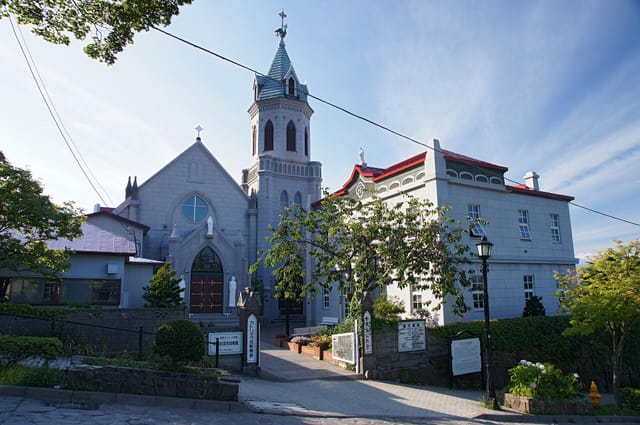
Hakodate Motomachi and Suehiro-cho
Hakodate, Hokkaido
On the slopes running from the foot of Mount Hakodate down to the harbor, Western-style churches and consulates from the port's opening stand alongside Japanese townhouses and the hybrid Japanese-Western houses unique to Hakodate. The city calls this port district the birthplace of Hakodate.
Historic districts
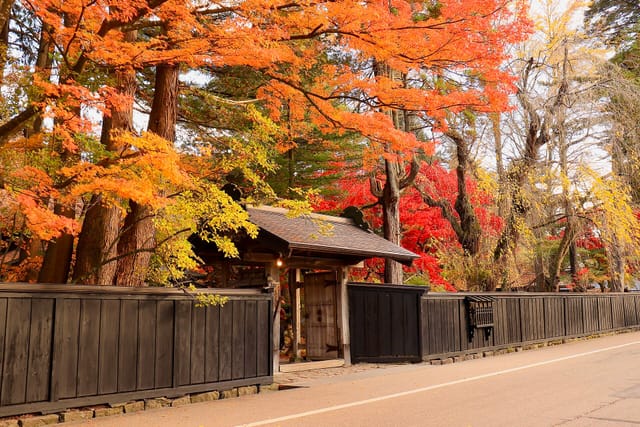
Kakunodate, Semboku
Semboku, Akita
A samurai town that still follows the street plan laid out in 1620, with fences lining its wide streets and residences that keep their main house, gate and storehouses. Weeping cherry trees over 300 years old and tall firs form groves that are part of the townscape itself.
Historic districts
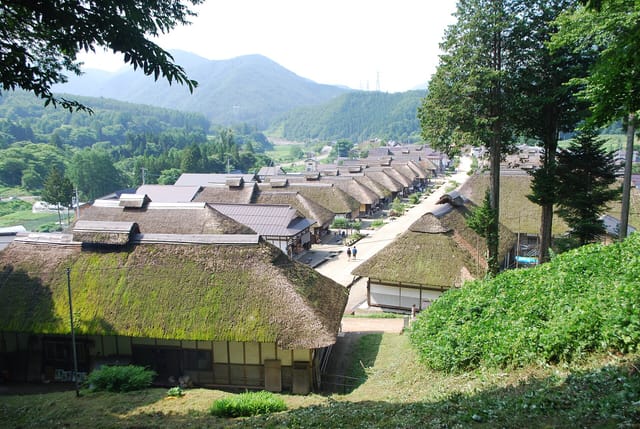
Ouchi-juku, Shimogo
Shimogo, Fukushima
A post town on the old highway between Aizu and Shimotsuke, where thatched, hip-roofed houses stand at nearly even intervals along a street about 450 meters long, their gable ends facing the road. Residents still cut thatch and re-roof the houses together, keeping the shape of an Edo-period post town alive in the mountains.
Historic districts
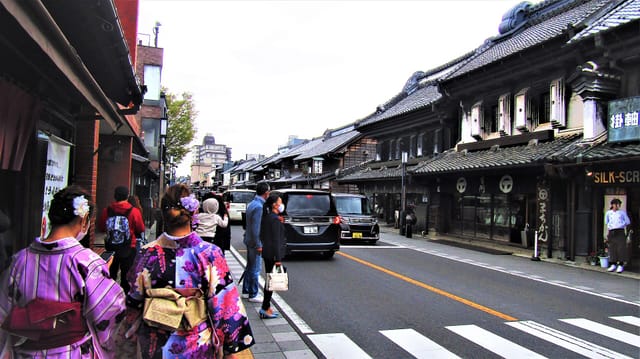
Kawagoe, Kawagoe
Kawagoe, Saitama
A merchant town of black-plastered kura-style shophouses with massive ridge tiles, rebuilt after the great Kawagoe fire of 1893. Each house is built a little differently, and modern Western-style buildings mixed among them show the town's long history as a trading center.
Historic districts
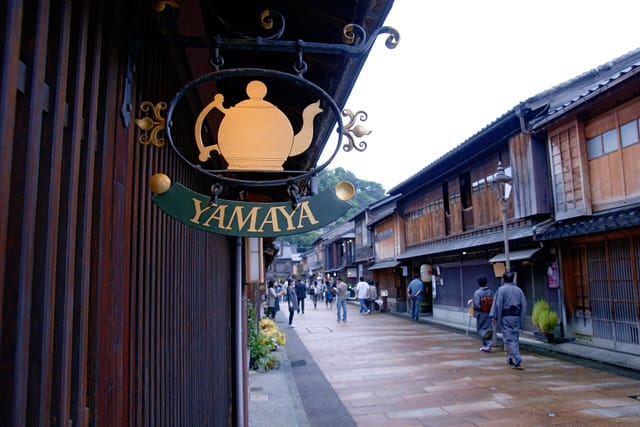
Higashiyama Higashi (Higashi Chaya), Kanazawa
Kanazawa, Ishikawa
A geisha teahouse district in Kanazawa laid out in 1820, with a rare concentration of teahouses from the late Edo to early Meiji periods. Matching houses with projecting lattices on the ground floor and tall second-floor banquet rooms line both sides of the street, carrying Kanazawa's teahouse culture into the present.
Historic districts
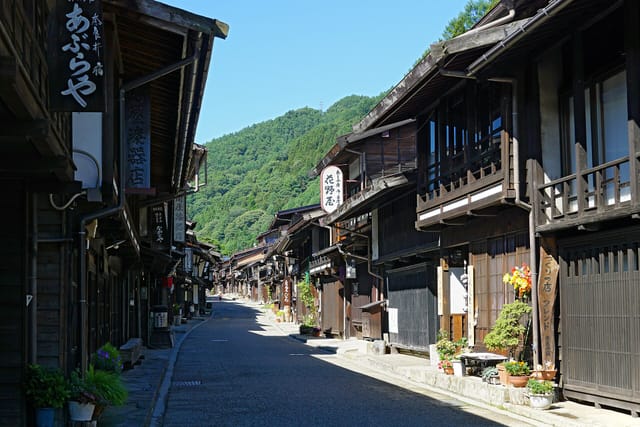
Narai-juku, Shiojiri
Shiojiri, Nagano
A post town on the Nakasendo at the foot of Torii Pass, said to have been the largest of the eleven Kiso post towns. Townhouses with overhanging upper floors line the old highway, and the town still keeps its traditions of lacquerware and bentwood crafts.
Historic districts
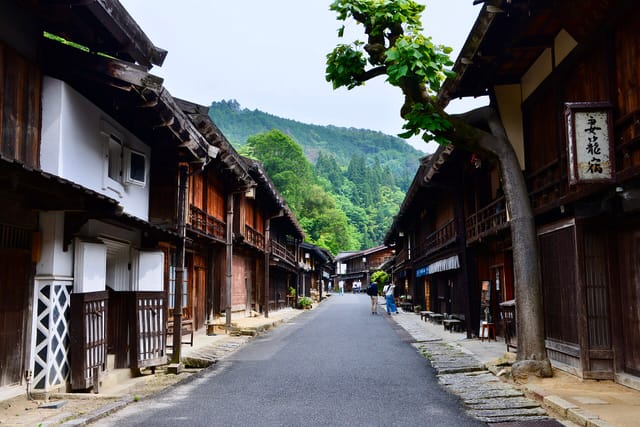
Tsumago-juku, Nagiso
Nagiso, Nagano
A Nakasendo post town whose rows of houses with overhanging upper floors and udatsu firewalls keep the look of the late Edo and Meiji periods. Residents pledged early on not to sell, rent out or tear down their properties, and the protected area extends to the mountains seen from the old road.
Historic districts
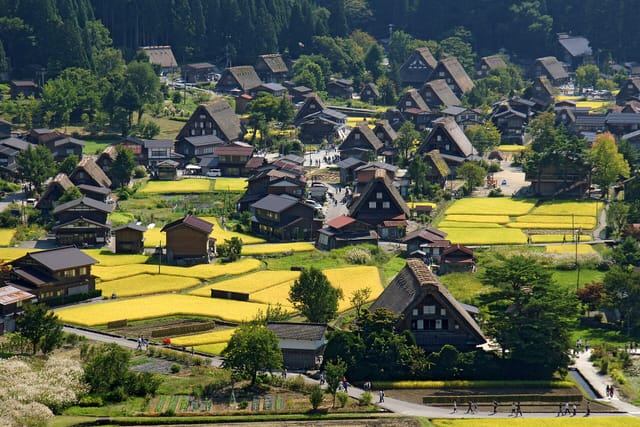
Shirakawa-go Ogimachi
Shirakawa, Gifu
A snow-country farming village where steep thatched gassho-zukuri farmhouses stand in rows on terraces along the Sho River, all facing the same way. Listed as a World Heritage Site with Gokayama in 1995, it still re-thatches its roofs through yui, a tradition of communal labor.
Historic districts
Sanmachi, Takayama
Takayama, Gifu
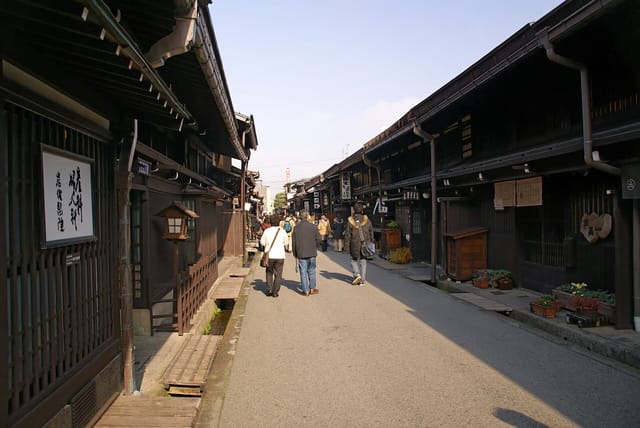
The merchant quarter of Takayama, a town ruled directly by the shogunate from the late 1600s. Townhouses with gently sloping roofs, deep eaves and fine wooden lattices line the three streets of Ichinomachi, Ninomachi and Sannomachi, backed by storehouses that served as firebreaks.
Historic districts
Gion Shinbashi, Kyoto
Kyoto, Kyoto
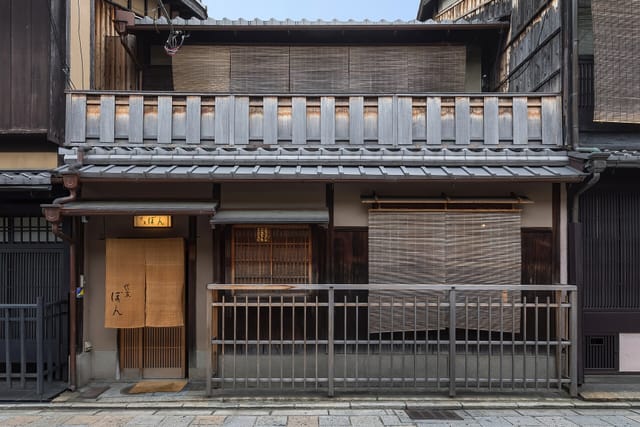
Gion Shinbashi is a teahouse quarter where ochaya-style townhouses with lattices and bamboo blinds line the Shirakawa stream. Its two-story houses, built just after the great fire of 1865, stand together with the stone paving and rows of cherry trees to form a quintessential Kyoto scene.
Historic districts
Sannenzaka, Kyoto
Kyoto, Kyoto
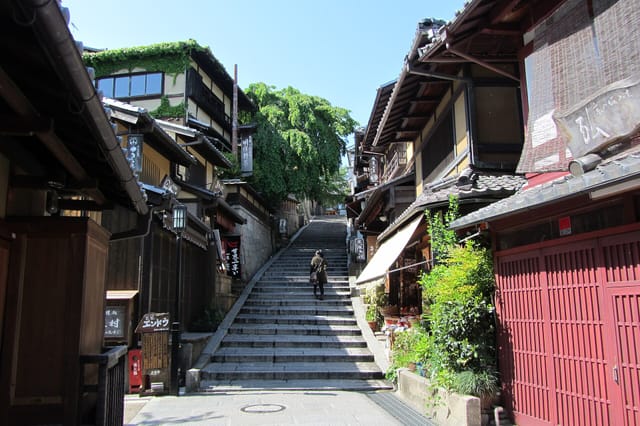
Sanneizaka grew up as a temple town along the old pilgrim paths to Kiyomizu-dera and the Gion shrine, with townhouses lining the stone steps and winding cobbled slopes of Sanneizaka and Ninenzaka. Walk it to see how the Yasaka Pagoda, Kodai-ji and the old streets come together in a classic Higashiyama view.
Historic districts
Kurashiki Kawahan (Bikan Historical Quarter)
Kurashiki, Okayama
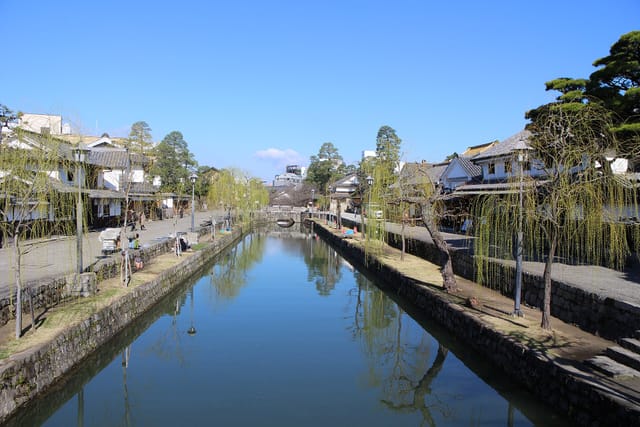
Along the Kurashiki River, white-walled merchant houses and storehouses recall the prosperity of a port town that served as a shogunate-controlled distribution hub. Compare details like namako tile walls and heavy tiled roofs, then enjoy a river boat ride or the evening illumination.
Historic districts
Horiuchi District, Hagi
Hagi, Yamaguchi
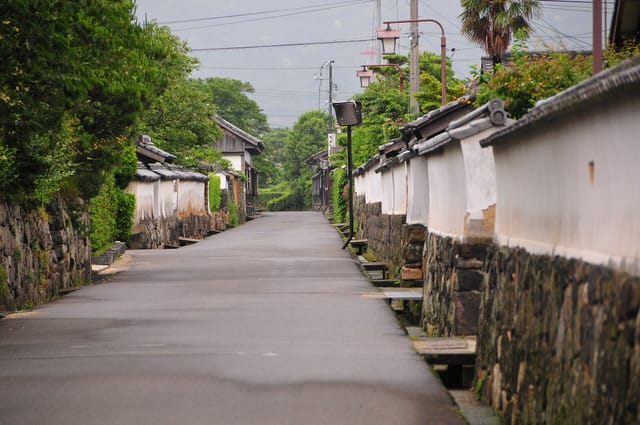
Horiuchi, the former third enclosure of Hagi Castle, is a samurai district where the Hagi domain's offices and the mansions of senior retainers once stood. Streets lined with heavy earthen walls and stone walls, with summer oranges peeking over the top, create a scene typical of Hagi.
Historic districts
Chiran, Minamikyushu
Minamikyushu, Kagoshima
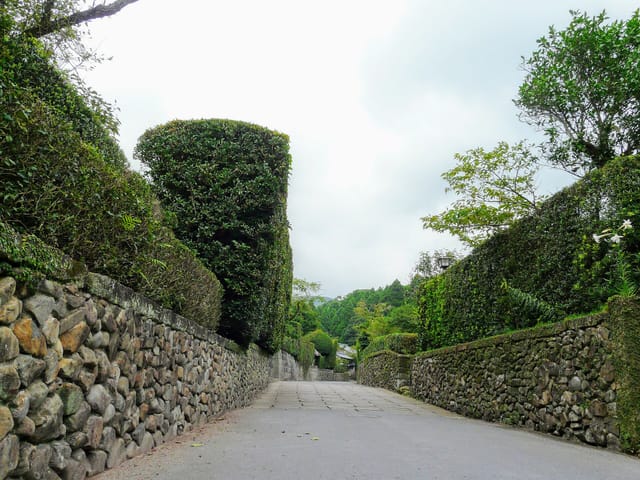
One of the Satsuma domain's samurai settlements known as fumoto, where samurai residences line streets of stone walls topped with neatly clipped hedges. Visitors can tour seven gardens designated as a national Place of Scenic Beauty in a town long called the Little Kyoto of Satsuma.
Historic districts
Taketomi Island, Taketomi
Taketomi, Okinawa
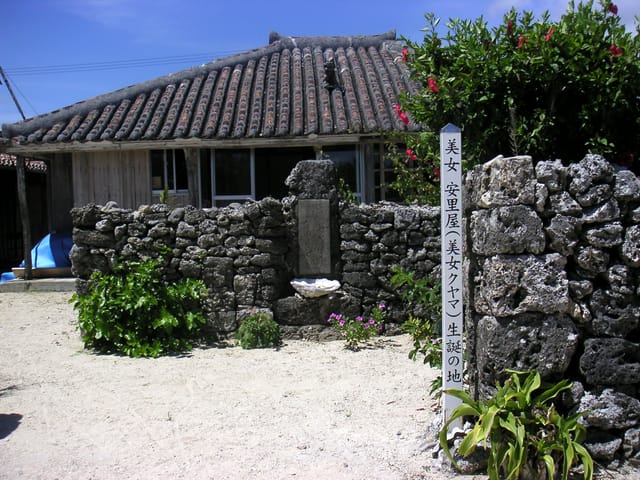
A village on a small Yaeyama island where red-tiled houses sit behind coral-stone walls called gukku along white sand lanes. Under the Taketomi Island Charter drawn up by the islanders, the lanes are swept every morning and the island's way of life and scenery are carefully protected.
Historic districts
Nakamachi, Hirosaki
Hirosaki, Aomori
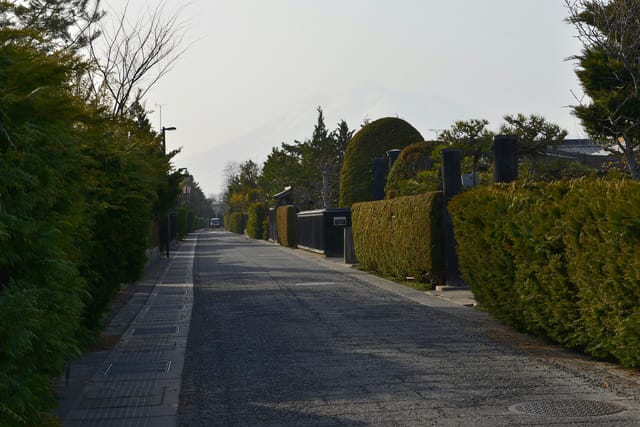
Nakamachi, Hirosaki is a samurai residence town in Hirosaki, Aomori, selected in 1978 as an Important Preservation District for Groups of Traditional Buildings.
Text in preparation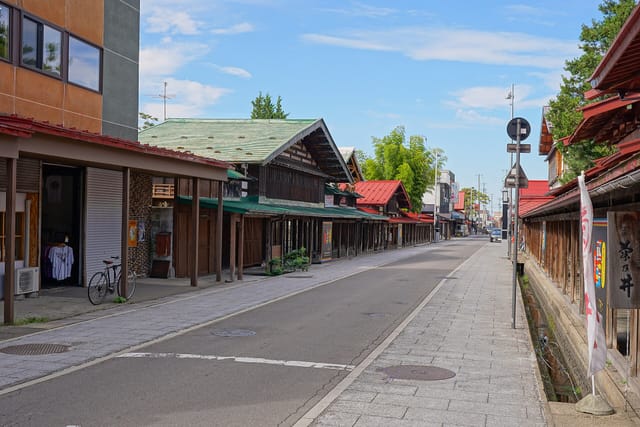
Historic districts
Nakamachi, Kuroishi
Kuroishi, Aomori
Nakamachi, Kuroishi is a merchant town in Kuroishi, Aomori, selected in 2005 as an Important Preservation District for Groups of Traditional Buildings.
Text in preparation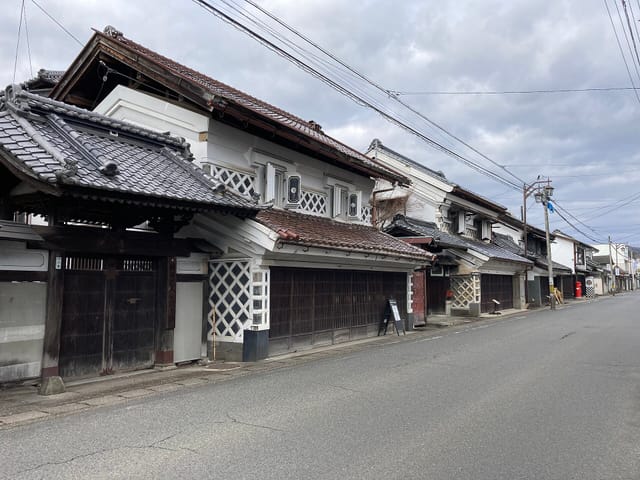
Historic districts
Murata, Murata Town
Murata, Miyagi
Murata, Murata Town is a merchant town in Murata, Miyagi, selected in 2014 as an Important Preservation District for Groups of Traditional Buildings.
Text in preparation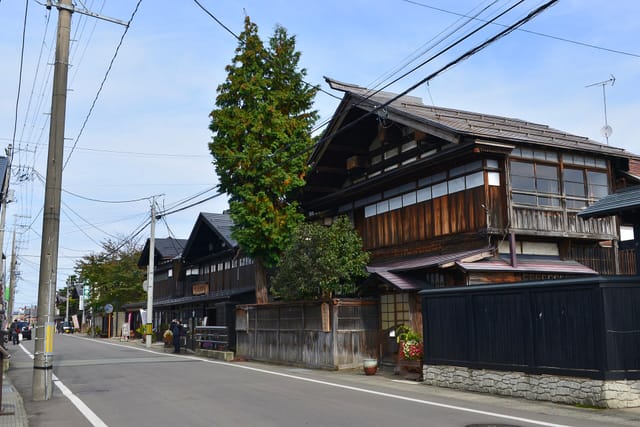
Historic districts
Masuda, Yokote
Yokote, Akita
Masuda, Yokote is a rural market town in Yokote, Akita, selected in 2013 as an Important Preservation District for Groups of Traditional Buildings.
Text in preparation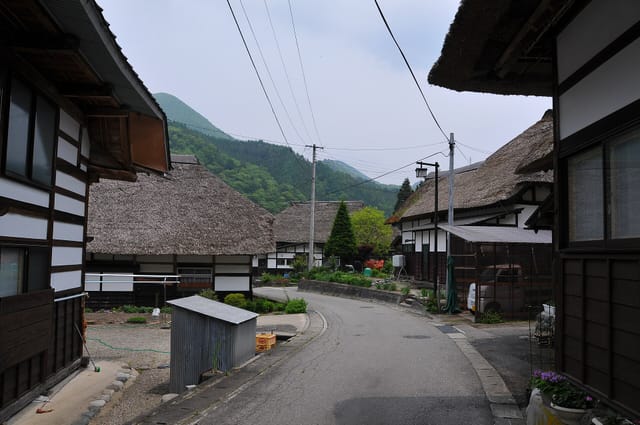
Historic districts
Maezawa, Minamiaizu
Minamiaizu, Fukushima
Maezawa, Minamiaizu is a mountain village in Minamiaizu, Fukushima, selected in 2011 as an Important Preservation District for Groups of Traditional Buildings.
Text in preparation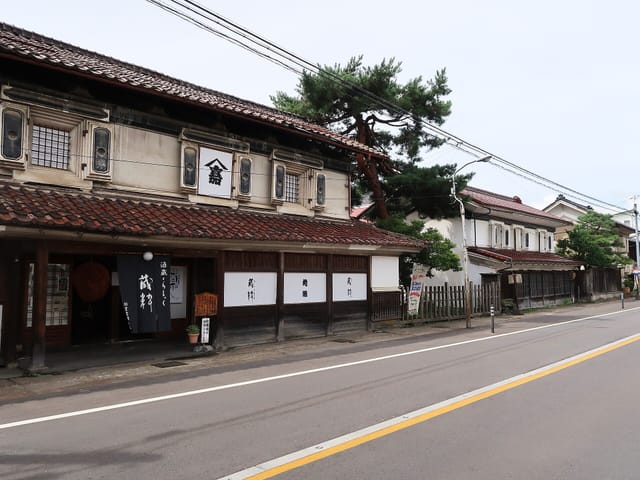
Historic districts
Odzuke, Kitakata
Kitakata, Fukushima
Odzuke, Kitakata is a rural market town in Kitakata, Fukushima, selected in 2018 as an Important Preservation District for Groups of Traditional Buildings.
Text in preparation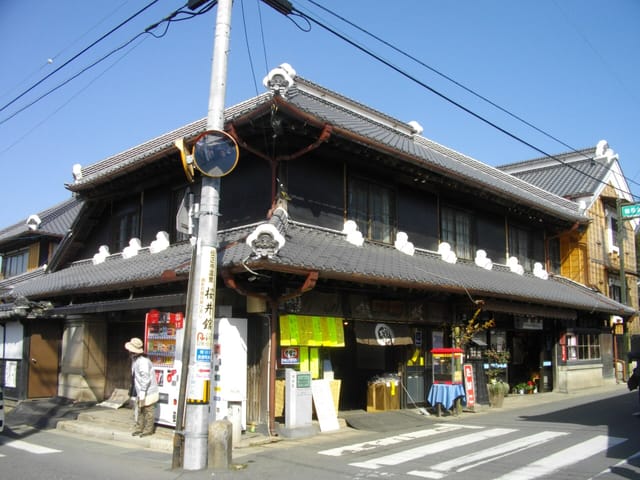
Historic districts
Makabe, Sakuragawa
Sakuragawa, Ibaraki
Makabe, Sakuragawa is a rural market town in Sakuragawa, Ibaraki, selected in 2010 as an Important Preservation District for Groups of Traditional Buildings.
Text in preparation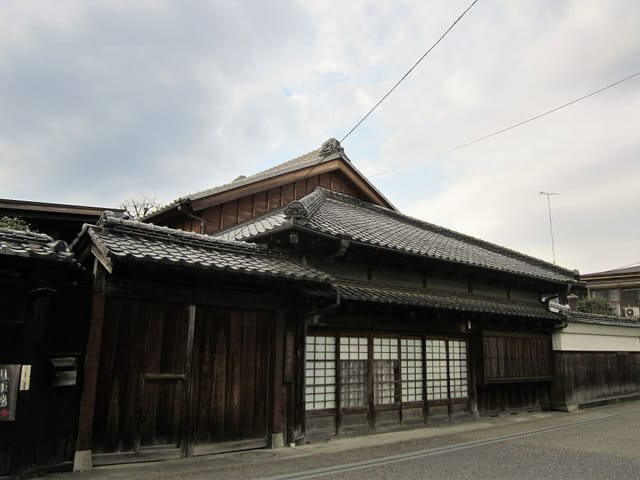
Historic districts
Tochigi Kaemon-cho
Tochigi, Tochigi
Tochigi Kaemon-cho is a rural market town in Tochigi, Tochigi, selected in 2012 as an Important Preservation District for Groups of Traditional Buildings.
Text in preparation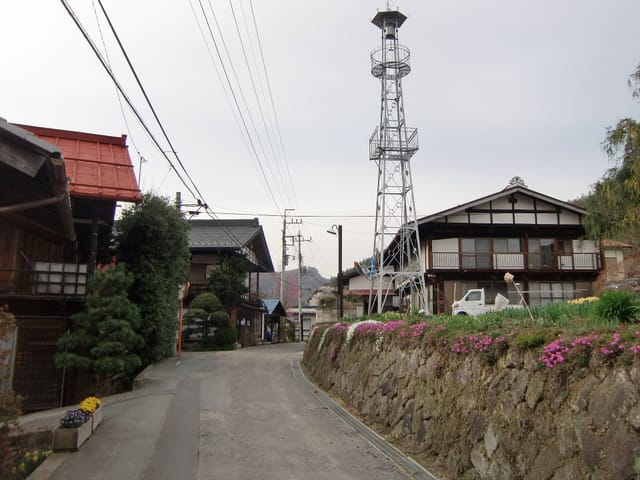
Historic districts
Akaiwa, Kuni, Nakanojo
Nakanojo, Gunma
Akaiwa, Kuni, Nakanojo is a mountain village in Nakanojo, Gunma, selected in 2006 as an Important Preservation District for Groups of Traditional Buildings.
Text in preparation