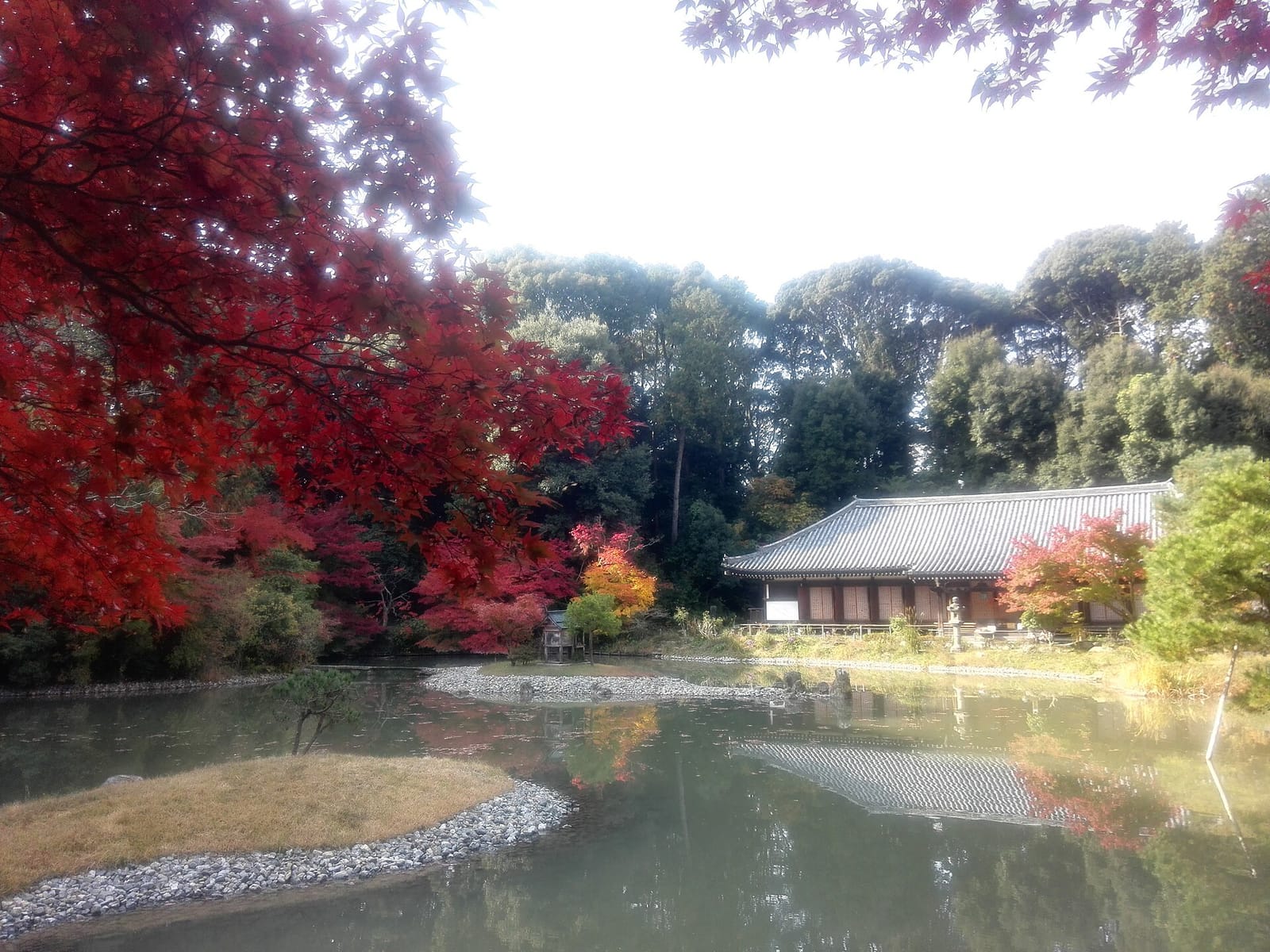
Joruri-ji
Photo: ONO Masanobu / CC0 · Original · Resized and croppedHeian period · Temples · National Treasures
Joruri-ji
浄瑠璃寺 (じょうるりじ)
At Joruri-ji you can see the late Heian Main Hall, where nine Amida statues sit in a row, and the Three-Story Pagoda facing it across a pond. The layout of the grounds, centered on a garden that represents the Pure Land paradise, is also worth seeing.
Key facts
- Designation
- National Treasures
- Era
- Heian period
- Type
- Temples
- Location
- Kizugawa, Kyoto
- Address
- 京都府木津川市加茂町西小
Before you go
- Opening hours
- March to November: 9:00 to 17:00 (main hall admission until 16:30). December to February: 10:00 to 16:00 (main hall admission until 15:30).
- Closed
- Check the official site
- Admission (adults)
- Admission to the main hall is 500 yen.
- Time needed
- Check the official site
- Getting there
- From Kamo Station on the JR Yamatoji Line, take the Kizugawa city community bus to Joruri-ji-mae. The seasonal Kizugawa Old Temples Pilgrimage Bus also stops here (in autumn 2026 it runs on weekends and holidays from October 10 to December 6, from JR Nara, Kintetsu Nara and JR Kizu stations).
- Best time to visit
- The hidden statue of Kichijoten is shown at New Year, in spring and in autumn. The National Treasure three-story pagoda is opened on the 8th of each month, January 1-3 and the equinox days, in fine weather only.
Checked against official information on November 13, 2026. Fees and hours can change, so please also check the official site before you go.
Sources for visitor information
Key facts
- Designation
- National Treasures
- Era
- Heian period
- Type
- Temples
- Location
- Kizugawa, Kyoto
- Address
- 京都府木津川市加茂町西小
About this place
Joruri-ji is a temple in Kamo-cho, Kizugawa, Kyoto Prefecture. Because nine statues of Amida Nyorai stand in a row in its Main Hall, it is also called Kutai-ji, "the temple of nine statues." According to the temple's founding legend, it began in the Nara period when the monk Gyoki built it on the orders of Emperor Shomu. On the other hand, an old record kept by the temple (an Important Cultural Property) says that it was founded in 1047 by a monk from Taima who enshrined a statue of Yakushi Nyorai there. The temple's name comes from Yakushi Ruriko Nyorai, the lord of the Eastern Pure Land of Joruri.
The grounds are laid out around a Pure Land style garden that tries to recreate the Pure Land paradise on earth. The Three-Story Pagoda stands to the east of the pond and the Main Hall to the west, facing each other across the water. East is the direction of the rising sun and west the direction of the setting sun, and the pond is explained as representing the sea that separates this world from the next. The garden and its pond were made in 1150, excavated in 1976, and then restored. On the spring and autumn equinoxes, the sun is said to rise from the direction of the pagoda and set directly behind the Main Hall.
The Main Hall, a National Treasure, dates from the late Heian period. It is a long, low building eleven bays wide and four bays deep, with a hip roof covered in hongawara tiles. Inside, nine seated statues of Amida Nyorai (National Treasures) stand side by side, and the front of the hall has as many doors as there are statues. According to the Japan Tourism Agency's explanation, the hall was completed in 1107 and moved to its present site in 1157. In the 12th century many halls housing nine Amida statues were built at the request of nobles and the imperial family, but this is said to be the only one where both the hall and its statues survive. The largest statue, in the center, is thought to have been made first in the late 11th century, and the other eight in the early 12th century.
The Three-Story Pagoda on the east shore of the pond is also a National Treasure. It is a three-bay, three-story pagoda from the late Heian period with a cypress-bark roof. It was originally built in Kyoto and was taken apart and moved here in 1178. The first story enshrines a 12th-century seated statue of Yakushi Nyorai (an Important Cultural Property), and the Buddhist paintings on its walls are thought to have been painted during repairs in the late Kamakura period. The Main Hall also holds statues of the Four Heavenly Kings, which are National Treasures, and the doors of the shrine holding the hidden standing statue of Kichijoten (an Important Cultural Property) are opened only at New Year, in spring and in autumn.
A good way to visit is to walk around the pond, looking across the water at the Main Hall on the west side and the pagoda on the east. The inside of the pagoda is open only on the 8th of each month, the first three days of the New Year and the middle day of the equinox weeks, and only in fine weather. Japanese andromeda (asebi) blooms from early to mid-March, and the Kyoto Prefecture tourism page also introduces the autumn leaves. Entry to the Main Hall closes 30 minutes before the temple closes, so allow plenty of time.
Buildings designated as National Treasures
Joruri-ji Main Hall (Kutai-ji Hall)
- Era
- Late Heian period
- Structure
- eleven bays wide, four bays deep, single-story, hip roof, one-bay front porch (kohai), hongawara tile roofing
- Designated
- March 29, 1952
Joruri-ji Three-Story Pagoda (Kutai-ji Pagoda)
- Era
- Late Heian period
- Structure
- three-story pagoda, three bays square, cypress-bark roofing
- Designated
- March 29, 1952
Sources and date checked
Facts such as eras, structures and locations are edited and translated by us from the Agency for Cultural Affairs’ database of nationally designated cultural properties. The Agency and the national government did not produce this page.
Database of nationally designated cultural properties- Agency for Cultural Affairs, Database of National Cultural Properties: Joruri-ji Main Hall (Kutai-ji Hall)
- Agency for Cultural Affairs, Database of National Cultural Properties: Joruri-ji Three-Story Pagoda (Kutai-ji Pagoda)
- Joruri-ji (Kyoto Prefecture)
- Joruri-ji (Ocha no Kyoto)
- Joruri-ji: Overview (Japan Tourism Agency, Multilingual Commentary Database)
- Joruri-ji: Main Hall and Seated Amida Statues (Japan Tourism Agency, Multilingual Commentary Database)
- Joruri-ji: Three-Story Pagoda (Japan Tourism Agency, Multilingual Commentary Database)
Checked on November 6, 2026
Report an error
If you notice a mistake, please tell us along with a source for the correct information.
Where to go next
Places you could see on the same day, and places worth comparing.
Nearby cultural heritage
Places within 10 km, nearest first. Distances are in a straight line.
More from Kyoto
Discover more of the same region on our sister sites.
Matsuri Biyori
UNESCO-listed festivals in Kyoto
- Yamahoko, the float ceremony of the Kyoto Gion festival
- Kyoto no Rokusai Nenbutsu
- Yasuraibana
- Kuta no Hanagasa Odori
Meiga no Furusato
Paintings linked to Kyoto
- View of Amanohashidate
- Viewing Maple Leaves
- Scenes in and around Kyoto (Funaki Version)
- Morning View of Uji River