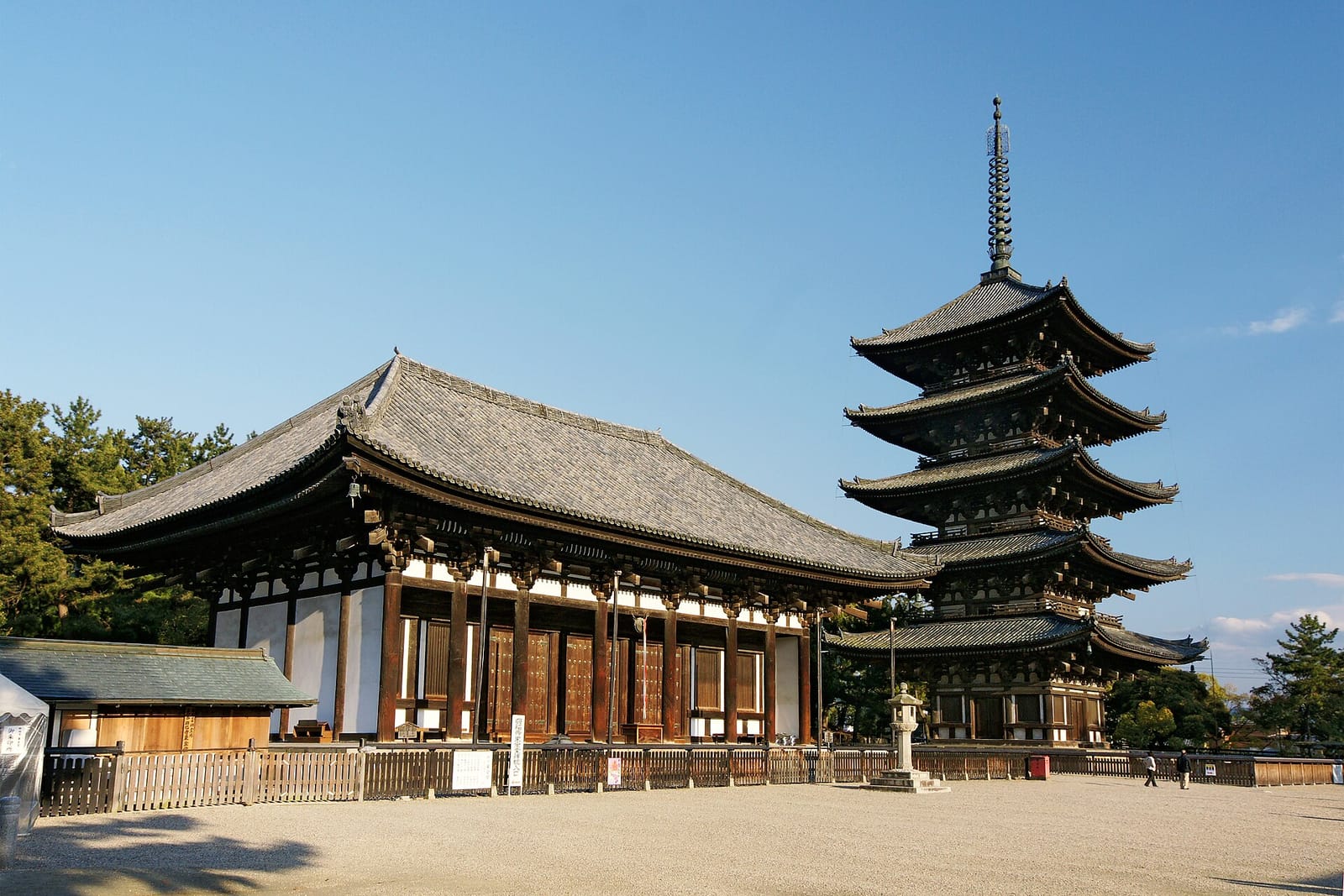
The Eastern Golden Hall and the five-story pagoda
Photo: 663highland / CC BY-SA 4.0 · Original · Resized and croppedKamakura period · Temples · National Treasures
Kofuku-ji
興福寺 (こうふくじ)
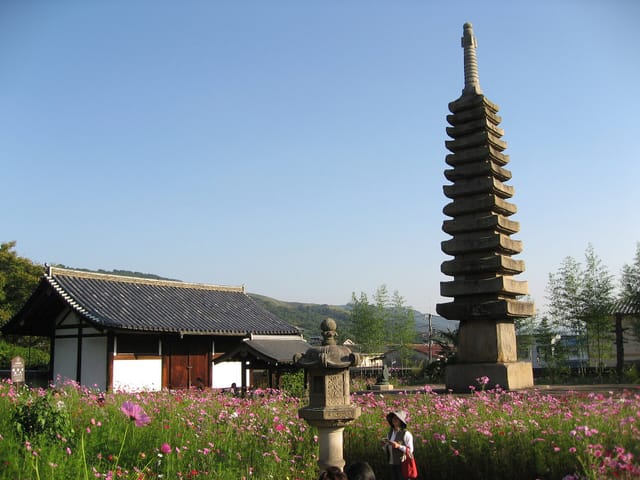
Once the temple of the Fujiwara clan, Kofuku-ji has halls and pagodas scattered through Nara Park. The five-story pagoda and Eastern Golden Hall, both rebuilt in the Muromachi period, stand side by side, and the octagonal Hokuendo, whose statues Unkei worked on, and an early-Kamakura three-story pagoda are also National Treasures.
Key facts
- Designation
- National Treasures
- Era
- Kamakura period
- Type
- Temples
- Location
- Nara, Nara
- Address
- 奈良県奈良市登大路町
Before you go
- Opening hours
- The Central Golden Hall, Eastern Golden Hall and National Treasure Museum are open 9:00-17:00 (last admission 16:45). Combined tickets are sold until 16:00.
- Closed
- Open every day
- Admission (adults)
- Adults pay ¥500 for the Central Golden Hall, ¥500 for the Eastern Golden Hall and ¥900 for the National Treasure Museum. Cash only.
- Time needed
- Check the official site
- Getting there
- About a 5-minute walk from Kintetsu Nara Station. From JR Nara Station, take a Nara Kotsu bus (about 7 minutes) or walk about 15 minutes. The temple car park holds 46 cars (¥2,000 per visit, 9:00-17:00).
- Best time to visit
- The Hokuendo is specially opened in spring and autumn, showing Unkei's late-career seated Maitreya and other statues (dates are announced on the official site). The three-story pagoda opens once a year on July 7, and the Nan'endo on October 17. The Tsuina-e demon-chasing rite is held at Setsubun in February, and Takigi Noh on the third Friday and Saturday of May.
- Good to know
- The five-story pagoda is currently under repair; check the official site's notices for the latest on the grounds and visiting. Photography is not allowed inside the halls and museum.
Checked against official information on November 12, 2026. Fees and hours can change, so please also check the official site before you go.
Sources for visitor information
Key facts
- Designation
- National Treasures
- Era
- Kamakura period
- Type
- Temples
- Location
- Nara, Nara
- Address
- 奈良県奈良市登大路町
About this place
Kofuku-ji developed as the temple of the Fujiwara clan. According to its official site, its predecessor was Yamashina-dera, said to have been built in 669 by Kagami no Okimi to pray for the recovery of her husband, Fujiwara no Kamatari. It later moved to Asuka and was called Umayasaka-dera, and when the capital moved to Heijo-kyo in 710, Fujiwara no Fuhito relocated it to the present site and named it Kofuku-ji. It ranked among the Four Great Temples in the Nara period and the Seven Great Temples in the Heian period, and enjoyed generous protection because of its close ties to the northern Fujiwara house. In the Heian period it also took control of Kasuga Shrine, and the 1595 land survey fixed a single combined holding for "Kasuga Shrine and Kofuku-ji."
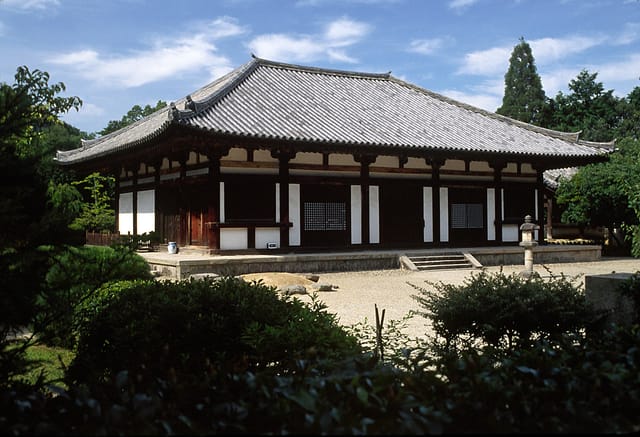
Kofuku-ji's history is one of repeated fires and rebuilding. It burned completely in 1180 in the fire set by Taira no Shigehira, and restoration began the next year. All four of its National Treasure buildings were built after that. According to the chronology, the Hokuen-do was built in 721 by Empress Genmei and Empress Gensho and rebuilt around 1210. The Eastern Golden Hall was founded by Emperor Shomu in 726 and rebuilt in 1415. The five-story pagoda was built by Empress Komyo in 730 and rebuilt in 1426. The three-story pagoda is recorded as built by Kokamon'in in 1143; the present structure dates to the early Kamakura period.
The Eastern Golden Hall and the five-story pagoda burned together in 1411. The hall was rebuilt first, and the pagoda about ten years after that. It is worth viewing the two as buildings from the same stretch of Muromachi-period rebuilding. The Hokuen-do is an octagonal hall, and the chronology notes that the sculptor Unkei began making its statues in 1208. The hall and the images inside it were thus completed at roughly the same time, within the Kamakura-period recovery.
In the Meiji era, the 1868 order separating Shinto and Buddhism and the 1870 law confiscating temple lands took away all land except the halls and towers. In 1874 the refectory and its annex were demolished, and in 1880 the old precinct became Nara Park. In 1717 the Golden Hall and Lecture Hall burned, and in 1819 a temporary Golden Hall was built with donations from a benefactor. In 1897 the Hokuen-do and the two pagodas were designated specially protected buildings, and a system for their preservation began to take shape. It works well to combine a walk through Nara Park with a look at the old towers and halls one by one.
Buildings designated as National Treasures
Kofuku-ji Hokuen-do Hall
- Era
- Early Kamakura period
- Year
- 1210
- Structure
- octagonal hall, single-storied, tiled roofing (honkawara-buki)
- Designated
- March 29, 1952
Kofuku-ji Three-Storied Pagoda
- Era
- Early Kamakura period
- Structure
- three-bay three-storied pagoda, tiled roofing (honkawara-buki)
- Designated
- March 29, 1952
Kofuku-ji Five-Storied Pagoda
- Era
- Mid-Muromachi period
- Year
- 1426
- Structure
- three-bay five-storied pagoda, tiled roofing (honkawara-buki)
- Designated
- March 29, 1952
Kofuku-ji Eastern Golden Hall (Tokondo)
- Era
- Mid-Muromachi period
- Year
- 1425
- Structure
- seven bays wide, four bays deep, single-storied, hipped roof, tiled roofing (honkawara-buki)
- Designated
- March 29, 1952
Sources and date checked
Facts such as eras, structures and locations are edited and translated by us from the Agency for Cultural Affairs’ database of nationally designated cultural properties. The Agency and the national government did not produce this page.
Database of nationally designated cultural properties- Agency for Cultural Affairs, Database of National Cultural Properties: Kofuku-ji Hokuen-do Hall
- Agency for Cultural Affairs, Database of National Cultural Properties: Kofuku-ji Three-Storied Pagoda
- Agency for Cultural Affairs, Database of National Cultural Properties: Kofuku-ji Five-Storied Pagoda
- Agency for Cultural Affairs, Database of National Cultural Properties: Kofuku-ji Eastern Golden Hall (Tokondo)
- Kofuku-ji official site: Overview
- Kofuku-ji official site: History of Kofuku-ji
Checked on November 6, 2026
Report an error
If you notice a mistake, please tell us along with a source for the correct information.
Where to go next
Places you could see on the same day, and places worth comparing.
Nearby cultural heritage
Places within 10 km, nearest first. Distances are in a straight line.
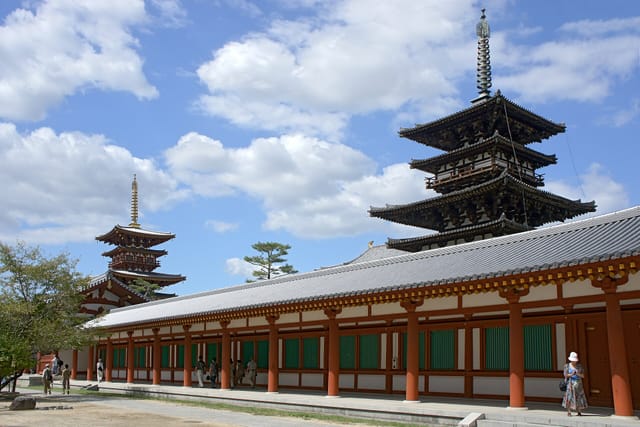
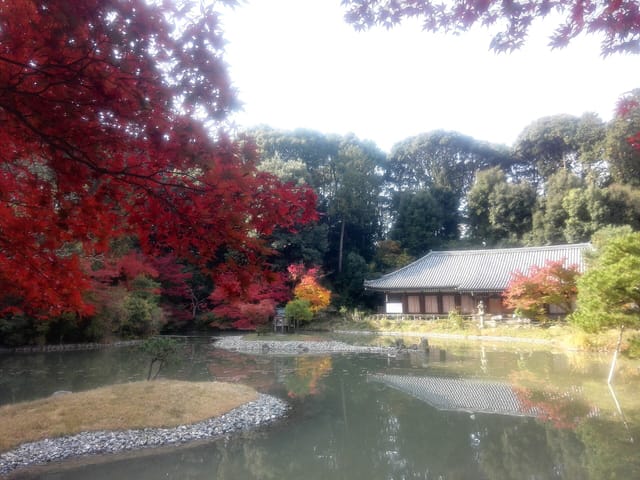
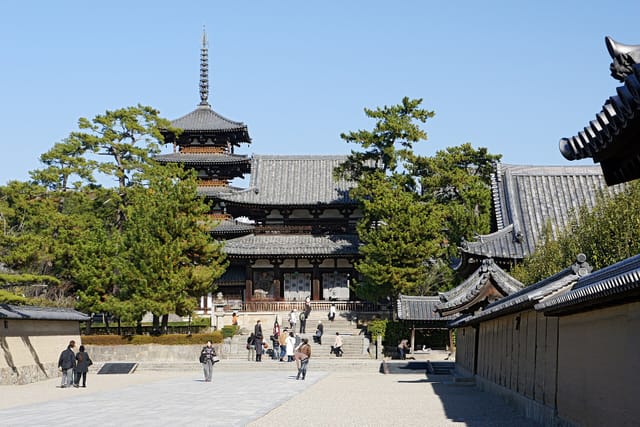
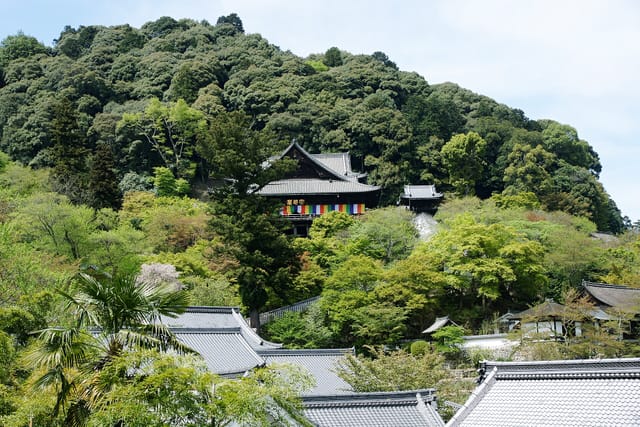
More from Nara
Discover more of the same region on our sister sites.
Sake Tabi
Breweries and distilleries in Nara
- FARMENTRY
- Golden Rabbit Beer Taproom
- The GoodWolf Brewery
- Harushika Sake Brewery Shop (Imanishi Seibei Shoten)