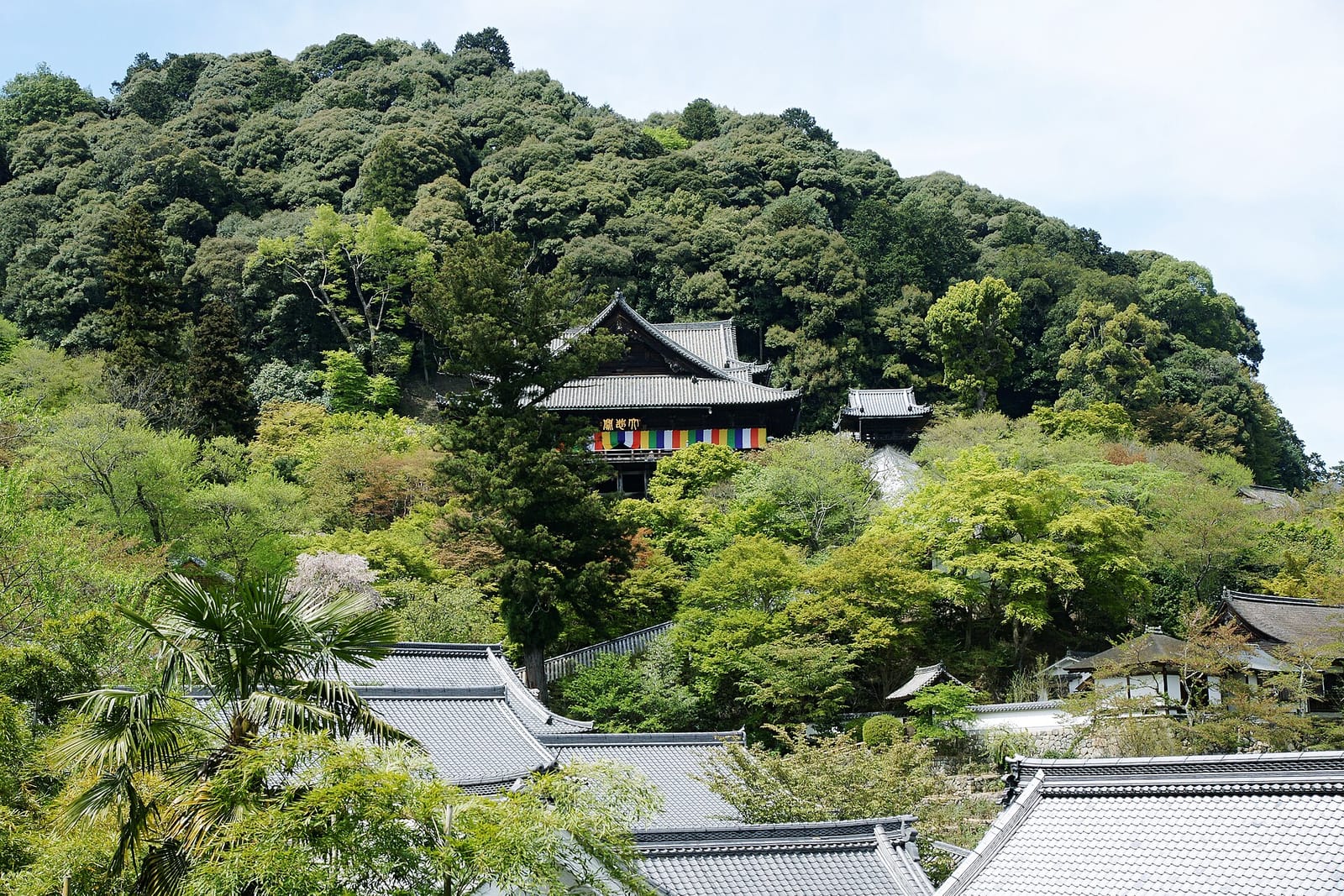
Hase-dera
Photo: 663highland / CC BY 2.5 · Original · Resized and croppedEdo period · Temples · National Treasures
Hase-dera
長谷寺 (はせでら)
Hase-dera has a National Treasure Main Hall built out over a cliff, and inside it stands the wooden principal image, an Eleven-Faced Kannon more than 10 meters tall. The Noboriro, a covered corridor of 399 steps, links the Nio Gate with the Main Hall.
Key facts
- Designation
- National Treasures
- Era
- Edo period
- Type
- Temples
- Location
- Sakurai, Nara
- Address
- 奈良県桜井市大字初瀬
Before you go
- Opening hours
- 8:30 to 17:00 from April to September, 9:00 to 17:00 in October, November and March, and 9:00 to 16:30 from December to February. Hours are extended during the peony festival and other events.
- Closed
- Check the official site
- Admission (adults)
- Admission is ¥500 for adults.
- Time needed
- Check the official site
- Getting there
- About 15 minutes on foot from Hasedera Station on the Kintetsu Osaka Line, where express trains stop. Parking costs ¥500 per car.
- Good to know
- The temple is very crowded in cherry blossom and peony season. Visitors are asked not to park on the street but to use the car parks along the way.
Checked against official information on November 12, 2026. Fees and hours can change, so please also check the official site before you go.
Sources for visitor information
Key facts
- Designation
- National Treasures
- Era
- Edo period
- Type
- Temples
- Location
- Sakurai, Nara
- Address
- 奈良県桜井市大字初瀬
About this place
Hase-dera is a temple in Hase, Sakurai, Nara Prefecture, in a place sung of in the Man'yoshu poetry anthology as "Hatsuse, the hidden land." Its formal name is Buzan Kagura-in Hase-dera. It is the head temple of the Buzan school of Shingon Buddhism and also the eighth stop on the Saigoku pilgrimage to 33 Kannon temples. According to the temple's brief history, in 686 the monk Domyo enshrined a bronze plaque depicting a scene from the Lotus Sutra on the western hill for Emperor Tenmu, and in 727 the monk Tokudo, on the order of Emperor Shomu, made an Eleven-Faced Kannon image on the eastern hill. Throughout the year it is cherished as the "temple of flowers."
The National Treasure Main Hall is a large hall built in the kakezukuri (stage) style, jutting out from a cliff partway up Mount Ohatsuse, and it is also called the Kannon-do or Daihikaku. The national cultural properties database dates it to 1650 in the early Edo period, and the temple describes it as a representative temple main hall from the large-scale building projects of the Tokugawa shogunate. It takes the form known as a narabido, combining the inner hall for the principal image and the worship hall into one, with a stone-paved floor between them. The south-facing front has a hip-and-gable roof, but the roof structure is so complex that it is also called yatsumune-zukuri (eight-ridge style).
The roofs are covered with clay tiles, and the worship hall is built slightly lower than the inner hall that enshrines the principal image. It was designated a National Treasure in December 2004. Inside stands the principal image, a standing Eleven-Faced Kannon (an Important Cultural Property) made in 1538 in the Muromachi period by the master sculptor Unso and others. It is a Hase-dera-style image holding a staff in the right hand and a water jar in the left, and at 10.18 meters tall, the temple calls it the largest wooden Buddhist statue in Japan. From the stage at the front you can look out over the grounds, laid out along the rise and fall of the land.
A covered corridor of steps, the Noboriro, leads from the Nio Gate up to the Main Hall. According to the temple, it was first built in 1039 by Nakatomi no Nobukiyo, a priest of Kasuga Taisha, in thanks for his son's recovery from illness. Today it has 108 bays and 399 steps, is divided into lower, middle and upper sections, and is hung with Hase-style lanterns. The corridor is an Important Cultural Property. The lower and middle sections and the Nio Gate were rebuilt in 1889. The grounds also hold a five-storied pagoda built in 1954, the first built in Japan after the war and called "the great pagoda of the Showa era," and Moto-Hasedera, said to be the site where Domyo first founded a temple.
The Shuhozo museum opens in spring (March to May) and autumn (October to December) to show National Treasures, Important Cultural Properties and other treasures handed down at the temple (free apart from the entry fee). In spring the cherry blossoms are followed by peonies, and during the peony festival a service is held to offer peonies to Kannon. In autumn the leaves color the grounds from October to early December, and on February 14 the Dadaoshi service is held, in which demons carrying torches rampage about. The steps of the Noboriro go on for a long way, so allow plenty of time and energy for your visit.
Buildings designated as National Treasures
Hase-dera Main Hall
- Era
- Early Edo period
- Year
- 1650
- Structure
- Main hall (shodo): 7 bays wide, 4 bays deep, single-story, hip-and-gable roof, mokoshi on the front and sides
- Designated
- December 10, 2004
Sources and date checked
Facts such as eras, structures and locations are edited and translated by us from the Agency for Cultural Affairs’ database of nationally designated cultural properties. The Agency and the national government did not produce this page.
Database of nationally designated cultural properties- Agency for Cultural Affairs, Database of National Cultural Properties: Hase-dera Main Hall
- Hase-dera: Brief History (Hase-dera official)
- Hase-dera: Guide to the Grounds (Hase-dera official)
- Hase-dera: Treasures: National Treasures (Hase-dera official)
- Hase-dera: Treasures (Statues) (Hase-dera official)
- Hase-dera: Shuhozo Museum (Hase-dera official)
- Hase-dera: Seasonal Events (Hase-dera official)
- Hase-dera: Noboriro Corridor (Hase-dera official)
Checked on November 6, 2026
Report an error
If you notice a mistake, please tell us along with a source for the correct information.
Where to go next
Places you could see on the same day, and places worth comparing.
Nearby cultural heritage
Places within 10 km, nearest first. Distances are in a straight line.
More from Nara
Discover more of the same region on our sister sites.
Sake Tabi
Breweries and distilleries in Nara
- FARMENTRY
- Golden Rabbit Beer Taproom
- The GoodWolf Brewery
- Harushika Sake Brewery Shop (Imanishi Seibei Shoten)