Cultural heritage in Nara
National Treasure buildings and historic districts in Nara.
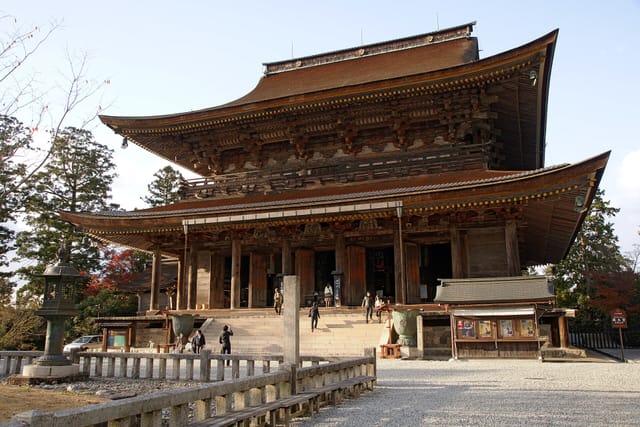
Muromachi · Temples · National Treasures
Kinpusen-ji
Yoshino, Nara
Said to have been founded by En no Gyoja, this is the head temple of Shugendo mountain worship. Its cypress-bark-roofed main hall, the Zao-do, is second in size only to Todai-ji's Great Buddha Hall among old wooden buildings. It stands on cherry-famed Mount Yoshino, part of the Kii Mountains World Heritage Site.
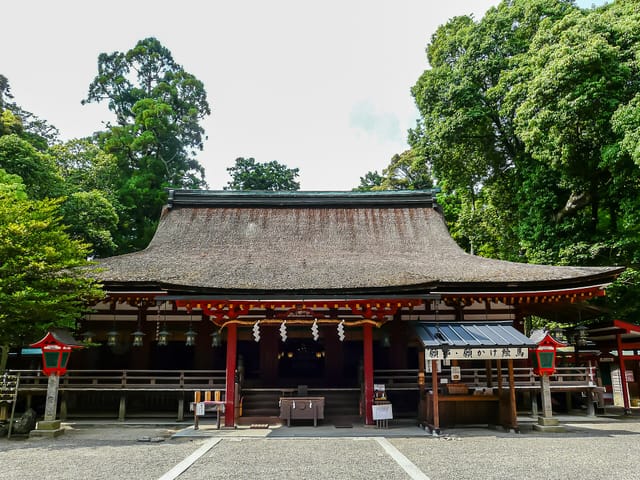
Kamakura · Shrines · National Treasures
Isonokami Jingu
Tenri, Nara
At Isonokami Jingu you can see two National Treasures: the Worship Hall (Haiden), said to be the oldest surviving worship hall in Japan, and the Worship Hall of the subsidiary Izumotakeo Shrine, moved here from Uchiyama Eikyu-ji. The stone fence around the forbidden ground behind the hall and the chickens roaming the grounds are also worth seeing.
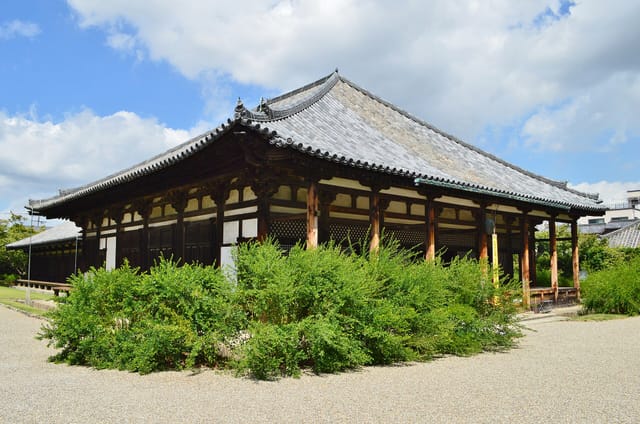
Nara · Temples · National Treasures
Gango-ji
Nara, Nara
At Gango-ji you can see the National Treasure Gokuraku-do and Zen-shitsu, Nara-period monks' quarters remodeled in the Kamakura period, and the Nara-period Miniature Five-Storied Pagoda kept in the Horinkan. Old tiles brought from Hoko-ji in Asuka are still used on the roofs of the Gokuraku-do and Zen-shitsu.
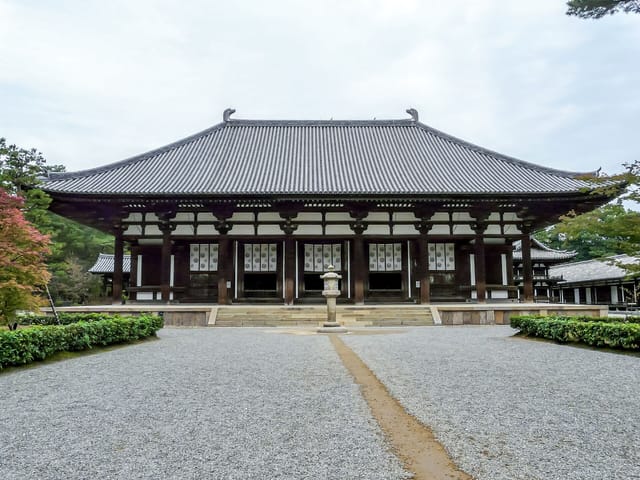
Nara · Temples · National Treasures
Toshodai-ji
Nara, Nara
The head temple of the Ritsu school, founded by Jianzhen (Ganjin), the Tang monk who reached Japan only on his sixth attempt. Nara-period buildings stand here, including the late-8th-century Golden Hall in its original form and a Lecture Hall moved from the Heijo Palace.
Edo · Shrines · National Treasures
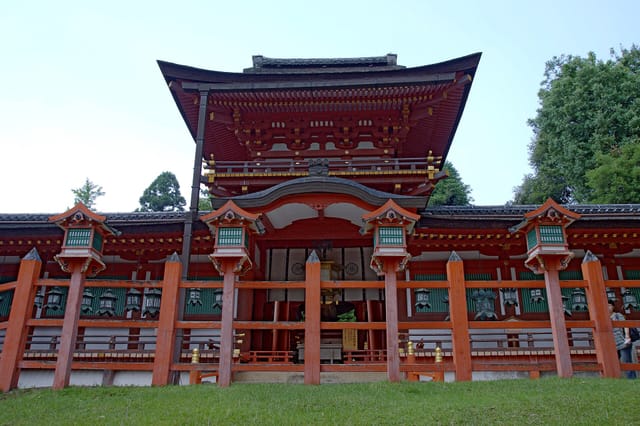
Kasuga Taisha
Nara, Nara
The tutelary shrine of the Fujiwara clan stands at the foot of Mount Mikasa. Its four vermilion main sanctuaries are National Treasures, the most orthodox example of the Kasuga style, kept in their old form by rebuilding roughly every 20 years. Some 3,000 lanterns line the grounds.
Kamakura · Temples · National Treasures
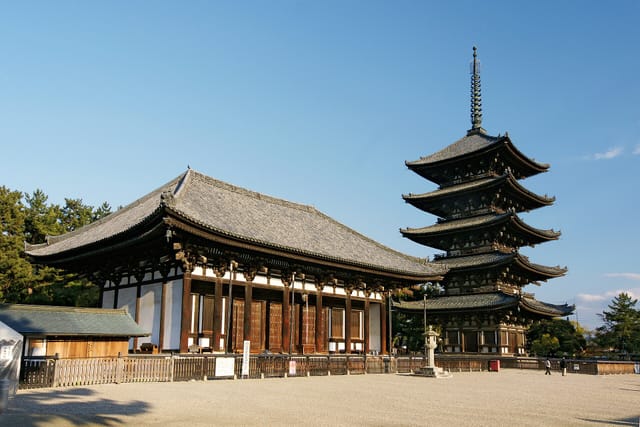
Kofuku-ji
Nara, Nara
Once the temple of the Fujiwara clan, Kofuku-ji has halls and pagodas scattered through Nara Park. The five-story pagoda and Eastern Golden Hall, both rebuilt in the Muromachi period, stand side by side, and the octagonal Hokuendo, whose statues Unkei worked on, and an early-Kamakura three-story pagoda are also National Treasures.
Nara · Temples · National Treasures
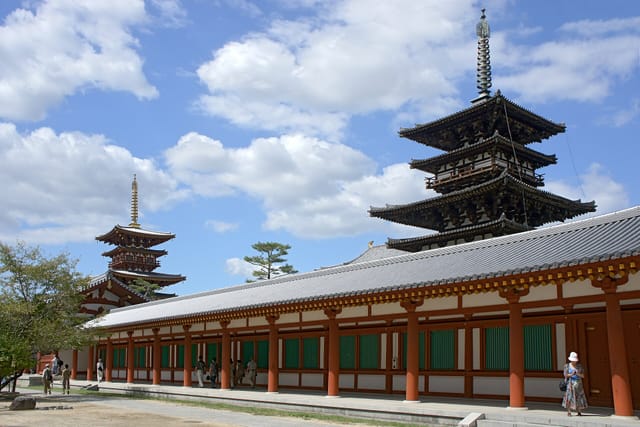
Yakushi-ji
Nara, Nara
The East Pagoda, the only building surviving from the founding, is a three-story pagoda that looks six-storied because of its intermediate roofs, earning it the nickname "frozen music." It stands beside the brightly colored West Pagoda rebuilt in the Showa era, and the Kamakura-period Toindo hall is also worth seeing.
Nara · Temples · National Treasures
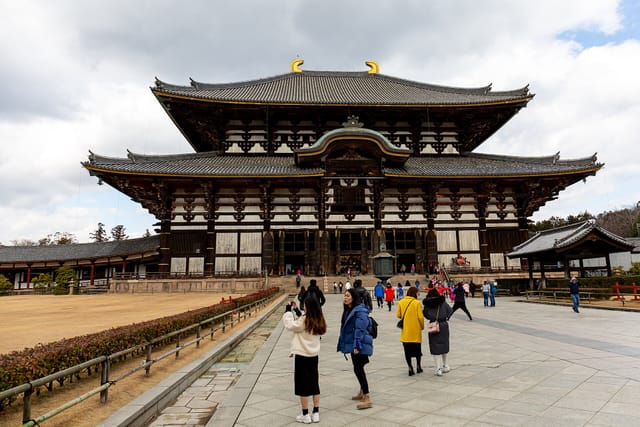
Todai-ji
Nara, Nara
Built around the Great Buddha commissioned by Emperor Shomu, Todai-ji has National Treasure buildings that trace its history of fire and rebuilding: the Edo-period Great Buddha Hall, the Nandaimon Gate rebuilt by Chogen in the Daibutsu style, and the Tenpyo-era Hokkedo.
Nara · Temples · National Treasures
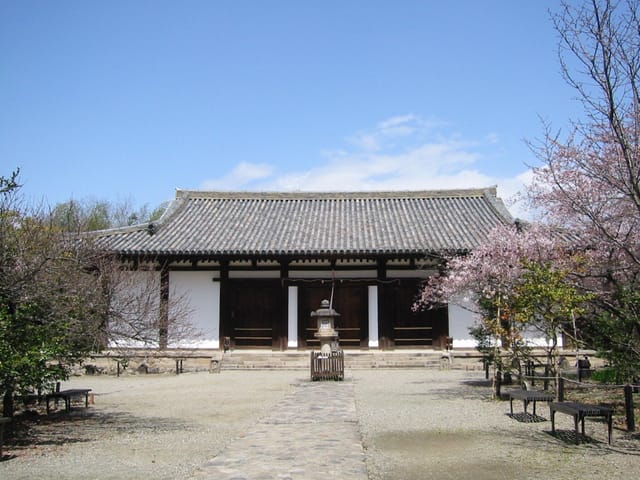
Shin-Yakushi-ji
Nara, Nara
At Shin-Yakushi-ji, inside the National Treasure main hall that survives from the temple's founding in the Nara period, you can see up close the seated Yakushi Buddha on its round earthen platform and the Twelve Heavenly Generals that surround it.
Heian · Temples · National Treasures
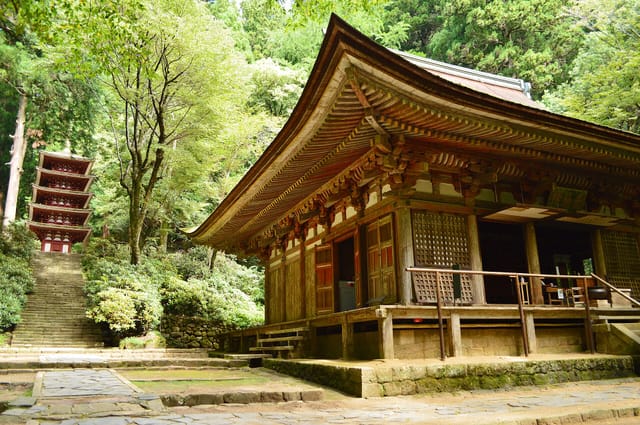
Muro-ji
Uda, Nara
Muro-ji has three National Treasure buildings: a Five-Storied Pagoda said to be the smallest outdoor pagoda in Japan, an early Heian Kondo and a Kamakura-period Main Hall (Kanjo-do). The pagoda and Kondo are under covers for roof work due to finish in 2027, but you can still worship at the Main Hall and see the Buddhist images in the Treasure Hall.
Edo · Temples · National Treasures
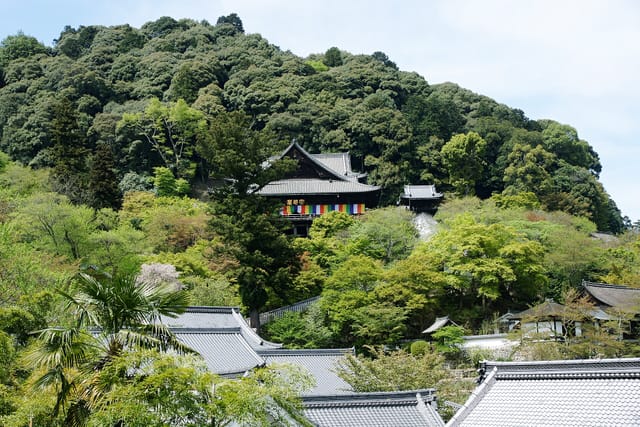
Hase-dera
Sakurai, Nara
Hase-dera has a National Treasure Main Hall built out over a cliff, and inside it stands the wooden principal image, an Eleven-Faced Kannon more than 10 meters tall. The Noboriro, a covered corridor of 399 steps, links the Nio Gate with the Main Hall.
Asuka · Temples · National Treasures
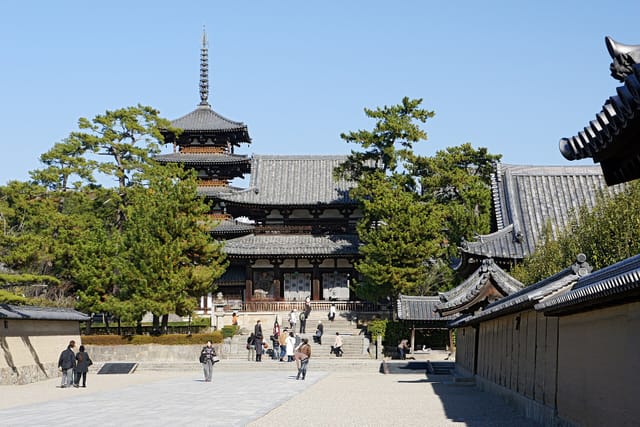
Horyu-ji
Ikaruga, Nara
Linked to Prince Shotoku, Horyu-ji's Western Precinct, where the Golden Hall and five-story pagoda stand side by side, is called the oldest group of wooden buildings in the world. With the Eastern Precinct and its octagonal Yumedono, it has 19 National Treasure buildings spanning the Asuka to Kamakura periods.
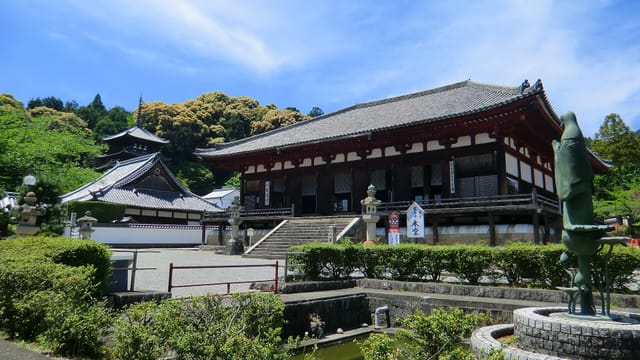
Nara · Temples · National Treasures
Taima-dera
Katsuragi, Nara
At Taima-dera you can see an ancient pair of three-story pagodas, the Nara-period East Pagoda and the early Heian West Pagoda, together with the late Heian Main Hall (Mandala Hall) that enshrines the Taima Mandala.
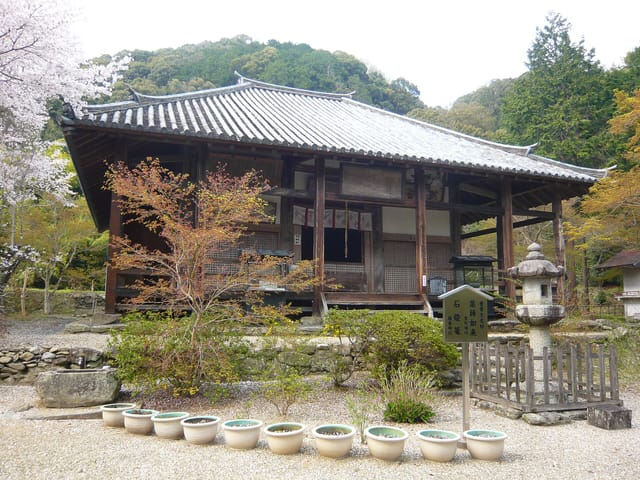
Nara · Temples · National Treasures
Eizan-ji
Gojo, Nara
Eizan-ji is a temple in Gojo, Nara. Its Octagonal Hall (Hakkaku-do) is a designated National Treasure (Nara period).
Text in preparation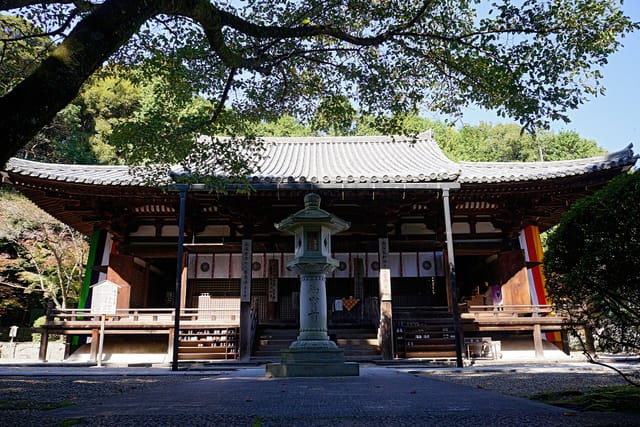
Kamakura · Temples · National Treasures
Ryosen-ji
Nara, Nara
Ryosen-ji is a temple in Nara, Nara. Its Main Hall (Hondo) is a designated National Treasure (Late Kamakura period, 1283).
Text in preparation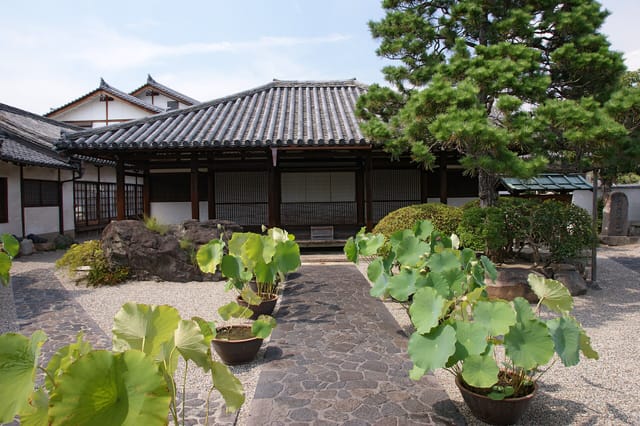
Kamakura · Temples · National Treasures
Jurin-in
Nara, Nara
Jurin-in is a temple in Nara, Nara. Its Main Hall (Hondo) is a designated National Treasure (Early Kamakura period).
Text in preparation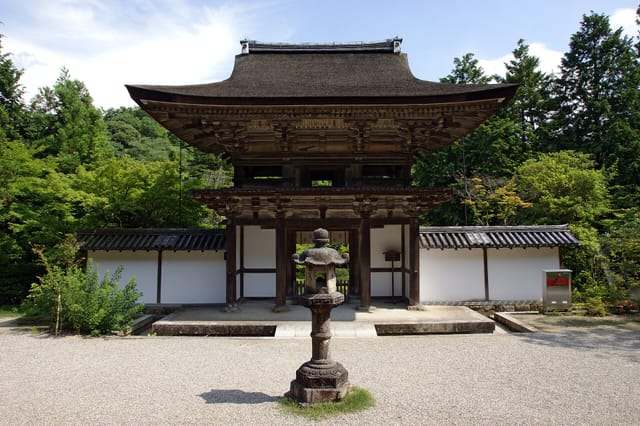
Kamakura · Temples · National Treasures
Enjo-ji
Nara, Nara
Enjo-ji is a temple in Nara, Nara. Its Kasuga-do Shrine and Hakusan-do Shrine are designated National Treasures (Early Kamakura period).
Text in preparation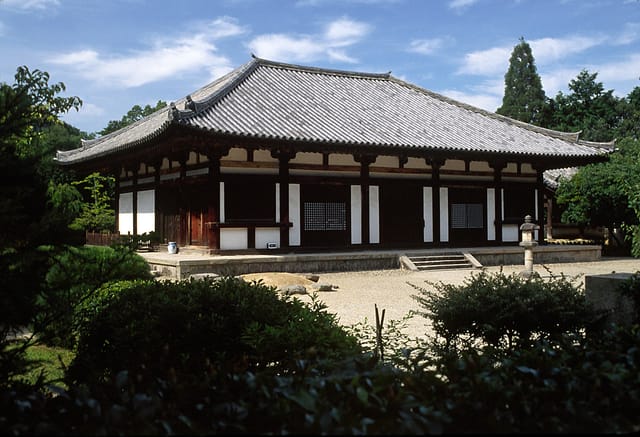
Kamakura · Temples · National Treasures
Akishino-dera
Nara, Nara
Akishino-dera is a temple in Nara, Nara. Its Main Hall (Hondo) is a designated National Treasure (Early Kamakura period).
Text in preparation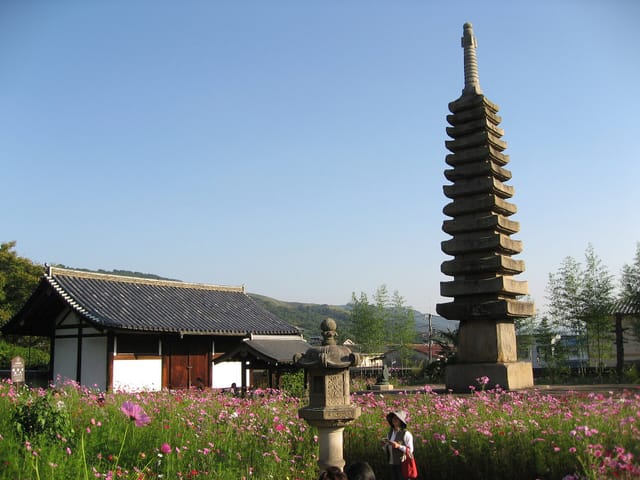
Kamakura · Temples · National Treasures
Hannya-ji
Nara, Nara
Hannya-ji is a temple in Nara, Nara. Its Two-Story Gate (Romon) is a designated National Treasure (Early Kamakura period).
Text in preparation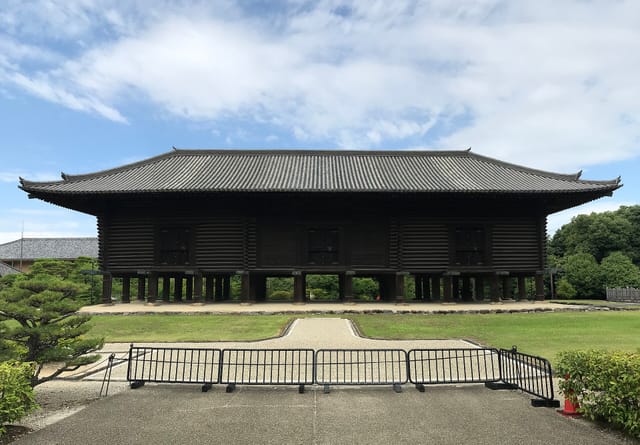
Nara · Temples · National Treasures
Shosoin
Nara, Nara
Shosoin is a temple in Nara, Nara. Its Main Storehouse (Shoso) is a designated National Treasure (Nara period).
Text in preparation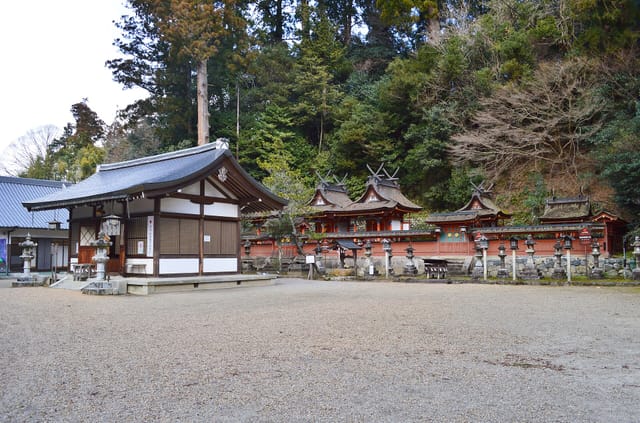
Kamakura · Shrines · National Treasures
Udamikumari Shrine (Second and Third Halls)
Uda, Nara
Udamikumari Shrine (Second and Third Halls) is a Shinto shrine in Uda, Nara. Its Udamikumari Shrine Main Sanctuary (Second Hall) and Udamikumari Shrine Main Sanctuary (Third Hall) are designated National Treasures (Late Kamakura period, 1320).
Text in preparation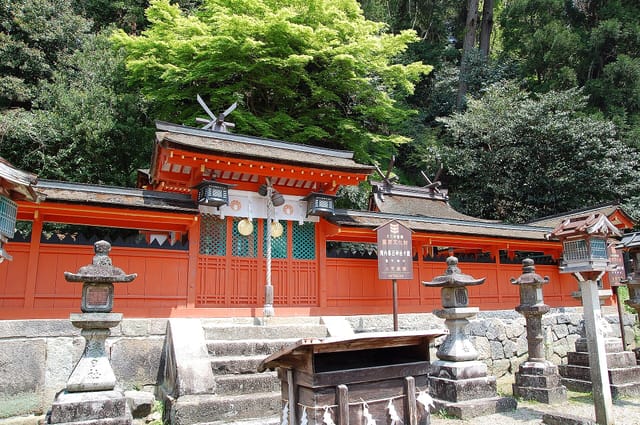
Kamakura · Shrines · National Treasures
Udamikumari Shrine (First Hall)
Uda, Nara
Udamikumari Shrine (First Hall) is a Shinto shrine in Uda, Nara. Its Udamikumari Shrine Main Sanctuary (First Hall) is a designated National Treasure (Late Kamakura period, 1320).
Text in preparation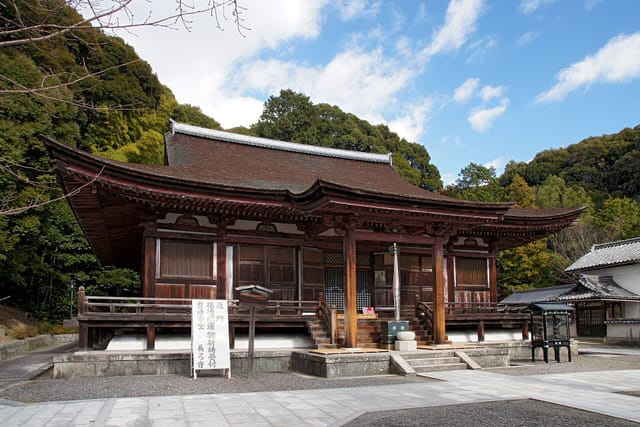
Kamakura · Temples · National Treasures
Chokyu-ji
Ikoma, Nara
Chokyu-ji is a temple in Ikoma, Nara. Its Main Hall is a designated National Treasure (Late Kamakura period, 1279).
Text in preparation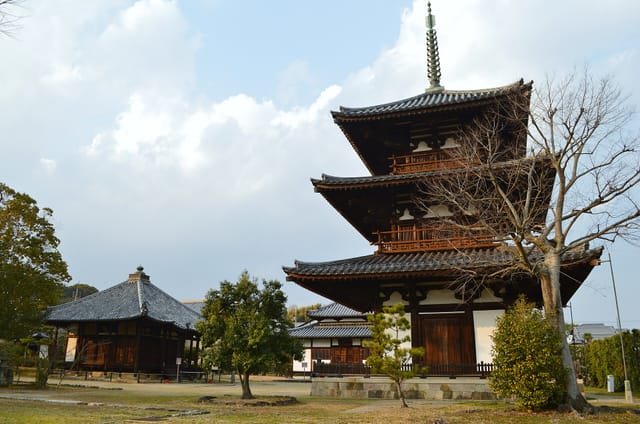
Asuka · Temples · National Treasures
Hokki-ji
Ikaruga, Nara
Hokki-ji is a temple in Ikaruga, Nara. Its Three-Story Pagoda is a designated National Treasure (Asuka period).
Text in preparationMore from Nara
Discover more of the same region on our sister sites.
Sake Tabi
Breweries and distilleries in Nara
- FARMENTRY
- Golden Rabbit Beer Taproom
- The GoodWolf Brewery
- Harushika Sake Brewery Shop (Imanishi Seibei Shoten)