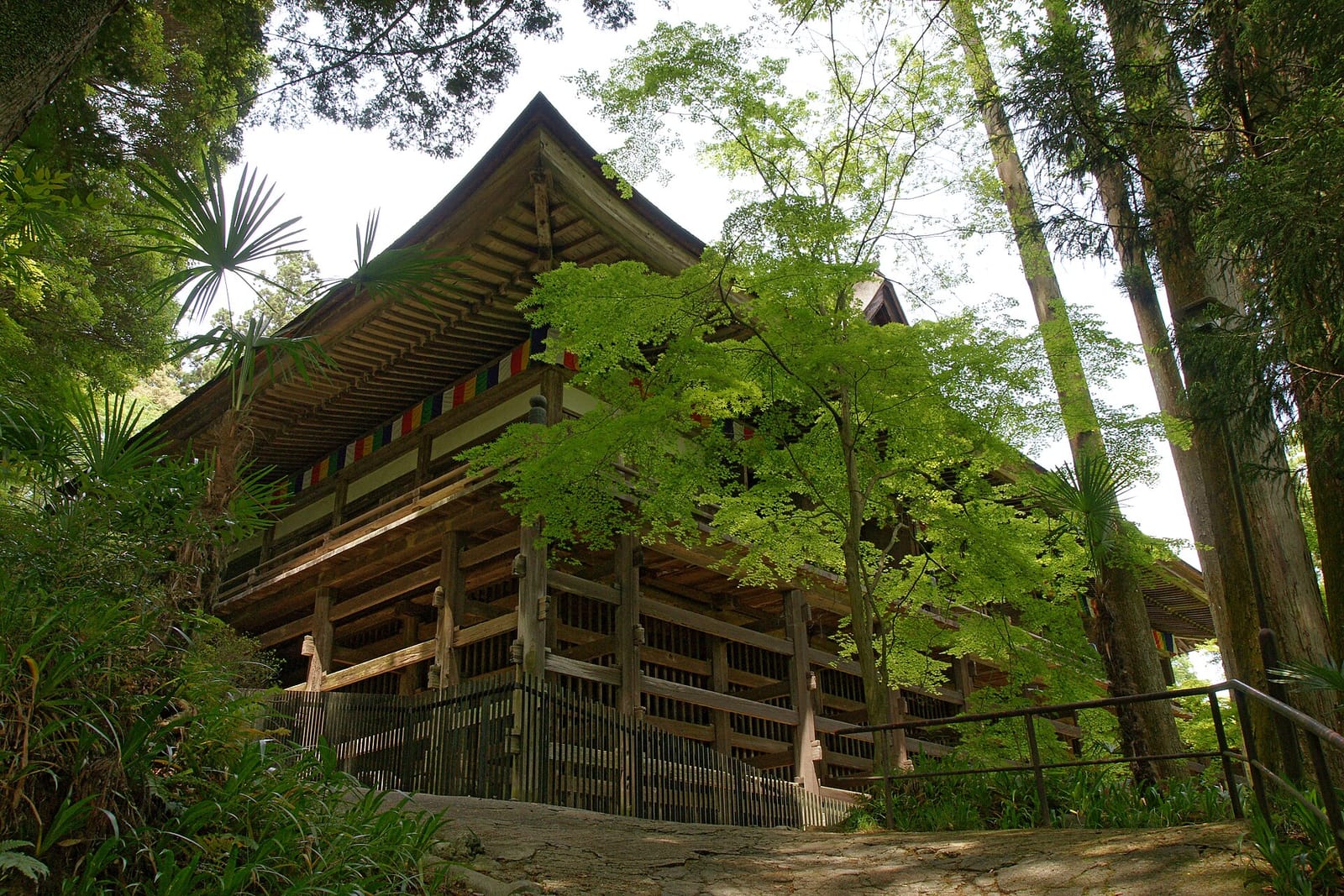
Ishiyama-dera
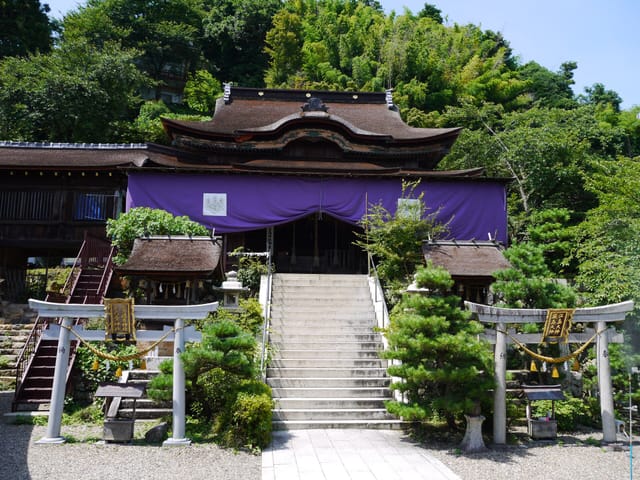
Photo: 663highland / CC BY 2.5 · Original · Resized and croppedHeian period · Temples · National Treasures
Ishiyama-dera
石山寺 (いしやまでら)
At Ishiyama-dera you can see two National Treasures: the Heian-period Main Hall, whose worship hall is built out over the wollastonite bedrock, and the Tahoto Pagoda of 1194, the oldest of its kind with a known date. There is also the Genji Room, where Murasaki Shikibu is said to have begun The Tale of Genji.
Key facts
- Designation
- National Treasures
- Era
- Heian period
- Type
- Temples
- Location
- Otsu, Shiga
- Address
- 滋賀県大津市石山寺
Before you go
- Opening hours
- 8:00 to 16:30 (last entry 16:00).
- Closed
- Check the official site
- Admission (adults)
- Admission is ¥600.
- Time needed
- Check the official site
- Getting there
- Take a JR Special Rapid from Kyoto Station to Ishiyama Station (13 min), then a Kojaku bus (routes 1, 4, 14, 52, 54 or 55) to the Ishiyamadera-sanmon-mae stop (about 10 min). The Ishiyama-dera tourist car park costs ¥600 per car and is a 1-minute walk from the temple.
- Best time to visit
- In autumn the temple holds the Atarayo Momiji maple illumination (November 13 to 29 in 2026).
- Good to know
- The temple car park has limited space, and visitors are asked not to park elsewhere so as not to disturb neighbors.
Checked against official information on November 12, 2026. Fees and hours can change, so please also check the official site before you go.
Sources for visitor information
Key facts
- Designation
- National Treasures
- Era
- Heian period
- Type
- Temples
- Location
- Otsu, Shiga
- Address
- 滋賀県大津市石山寺
About this place
Ishiyama-dera stands in Otsu, Shiga, on the west bank of the Seta River, which flows out of Lake Biwa, and is a head temple of the Toji Shingon school. Its name comes from the wollastonite rock (a national Natural Monument) that juts out all over the grounds, and the Main Hall and the Tahoto Pagoda are built on this rock. According to the Ishiyama-dera Engi picture scrolls, Roben of Todai-ji founded it in 747 at the wish of Emperor Shomu. The temple relates that Roben prayed here for the gold needed for the Great Buddha, gold was then found in Mutsu Province, and the hermitage he built became the temple.
In the Heian period it became a center of esoteric Shingon Buddhism, and the 'Ishiyama pilgrimage', staying overnight in prayer after traveling from the capital, became popular among aristocrats, especially women. A well-known legend says Murasaki Shikibu began writing The Tale of Genji while in retreat here, and the mother of Fujiwara no Michitsuna (The Kagero Diary) and the daughter of Sugawara no Takasue (The Sarashina Diary) also described their retreats in their works. The principal image, a two-armed Nyoirin Kannon, is a secret Buddha sealed by imperial order, and its doors are opened once every 33 years.
The Main Hall, a National Treasure, was rebuilt in 1096 after a fire caused by lightning in 1078, and the temple calls it the oldest wooden building in Shiga Prefecture. It is a composite building: in front of the inner hall, seven bays wide and four bays deep, an intermediate room links it to a worship hall. According to the temple, the worship hall was added in 1602 with a donation from Yodo-dono; it is built on stilts out over the wollastonite bedrock. Look also for the roof of the intermediate room, which rises above the ridge of the worship hall to show a gable. At the east end of the intermediate room is the 'Genji Room', where Murasaki Shikibu is said to have stayed, with a figure of her on display.
The other National Treasure, the Tahoto Pagoda, is said to have been donated by Minamoto no Yoritomo, and an ink inscription in the lower story shows that it was built in 1194. According to the temple, it is the oldest of the tahoto pagodas whose construction dates are known. It has two stories, square below and round above, and is admired for the balance between its two stories and the curves of its eaves; the roof is covered with cypress bark. The principal image inside, a Dainichi Nyorai of the Diamond Realm, is a work by Kaikei and is designated an Important Cultural Property.
A visit begins at the East Gate (an Important Cultural Property) beside the Seta River. Follow the approach and climb the stone steps called Osaka, and the wollastonite rock rises in front of you, with the Main Hall and the Tahoto Pagoda above it. East of the pagoda is the Moon-Viewing Pavilion overlooking the Seta River, and 'Autumn Moon at Ishiyama' is one of the Eight Views of Omi. Known as a 'temple of flowers', it has plum blossoms from around February, early cherry blossoms from early March, and 200-year-old Kirishima azaleas lining the approach from late April into May, while in autumn the leaves color the rocks and halls.
Buildings designated as National Treasures
Ishiyama-dera Main Hall
- Era
- Late Heian period
- Structure
- Main hall: seven bays wide, four bays deep
- Designated
- November 22, 1952
Ishiyama-dera Tahoto Pagoda
- Era
- Early Kamakura period
- Year
- 1194
- Structure
- three-bay tahoto pagoda, cypress-bark roofing
- Designated
- June 9, 1951
Sources and date checked
Facts such as eras, structures and locations are edited and translated by us from the Agency for Cultural Affairs’ database of nationally designated cultural properties. The Agency and the national government did not produce this page.
Database of nationally designated cultural properties- Agency for Cultural Affairs, Database of National Cultural Properties: Ishiyama-dera Main Hall
- Agency for Cultural Affairs, Database of National Cultural Properties: Ishiyama-dera Tahoto Pagoda
- History of Ishiyama-dera (Ishiyama-dera)
- Temple Overview (Ishiyama-dera)
- Guide to the Temple Grounds (Ishiyama-dera)
Checked on November 6, 2026
Report an error
If you notice a mistake, please tell us along with a source for the correct information.
Where to go next
Places you could see on the same day, and places worth comparing.
Nearby cultural heritage
Places within 10 km, nearest first. Distances are in a straight line.
More from Shiga
Discover more of the same region on our sister sites.
Matsuri Biyori
UNESCO-listed festivals in Shiga
- Nagahama Hikiyama Festival Float Event
- Otsu Festival Hikiyama Float Event
- Omi Konan no San'yare Odori
- Omi no Kenketo Matsuri Naginata Furi
Meiga no Furusato
Paintings linked to Shiga
- The Sixty-nine Stations of the Kisokaido: Kashiwabara
- The Sixty-nine Stations of the Kisokaido: Samegai
- The Sixty-nine Stations of the Kisokaido: Banba
- The Sixty-nine Stations of the Kisokaido: Toriimoto
Sake Tabi
Breweries and distilleries in Shiga
- Fujii Honke Sake Brewery Tour
- Nagahama Distillery (Nagahama Roman Beer)
- Nagahama Roman Beer
- Hikone Beer Kojinyama Brewery