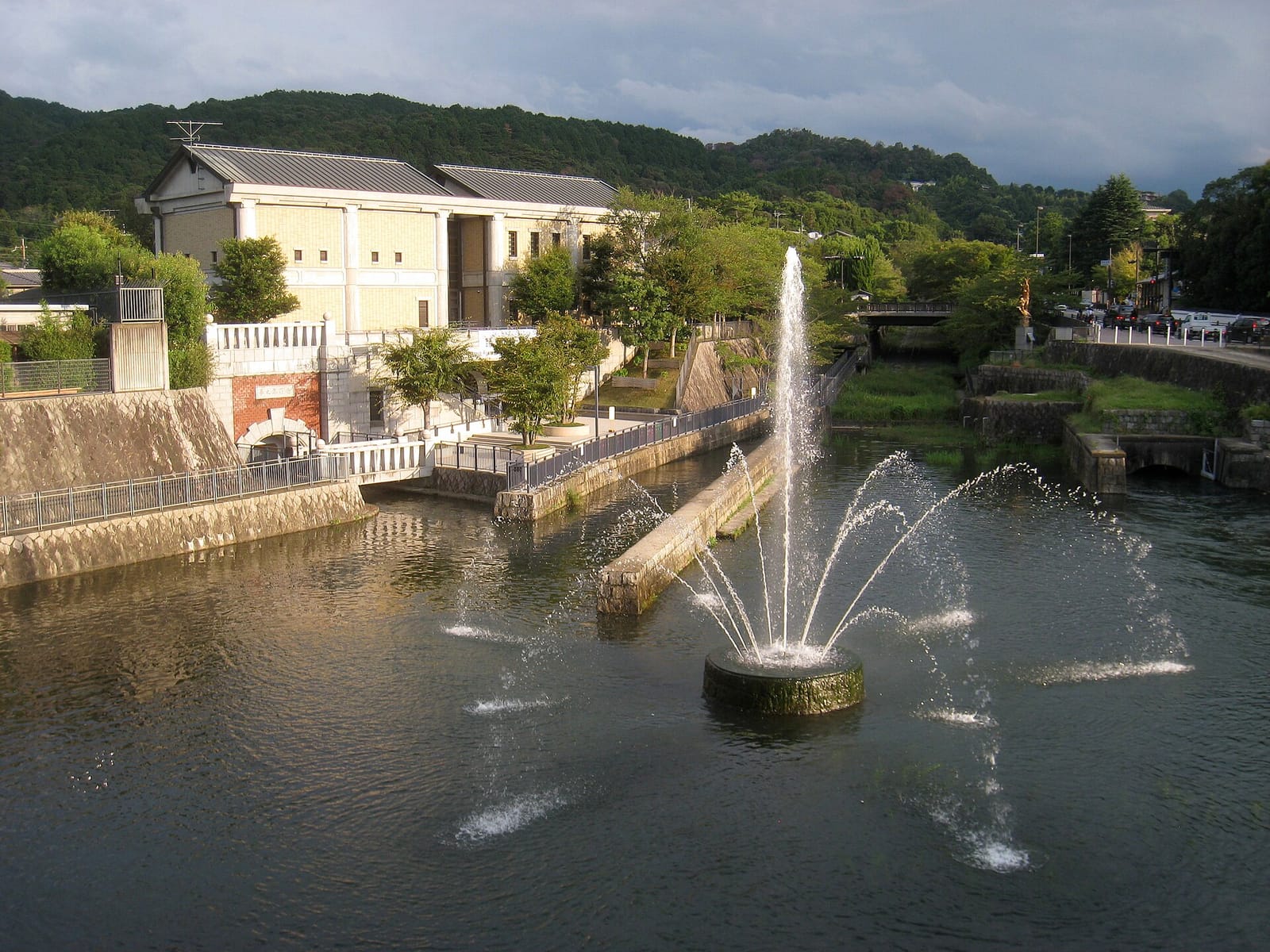
Lake Biwa Canal (Incline, Nanzen-ji Aqueduct and others)
Photo: Daderot / Public domain · Original · Resized and croppedMeiji period and later · Modern architecture · National Treasures
Lake Biwa Canal (Incline, Nanzen-ji Aqueduct and others)
琵琶湖疏水(インクライン・南禅寺水路閣ほか) (びわこそすい)
Lake Biwa Canal (Incline, Nanzen-ji Aqueduct and others) is a modern heritage site in Kyoto, Kyoto. 4 of its buildings, including the Lake Biwa Canal Facilities (No. 2 Tunnel) and Lake Biwa Canal Facilities (No. 3 Tunnel), are designated National Treasures (Meiji period, 1888–1889).
Please check opening hours and fees locally before you go.
The text in this language is in preparation.
Key facts
- Designation
- National Treasures
- Era
- Meiji period and later
- Type
- Modern architecture
- Location
- Kyoto, Kyoto
- Address
- 京都府京都市山科区御陵黒岩、同御陵封ジ山町
Key facts
- Designation
- National Treasures
- Era
- Meiji period and later
- Type
- Modern architecture
- Location
- Kyoto, Kyoto
- Address
- 京都府京都市山科区御陵黒岩、同御陵封ジ山町
Buildings designated as National Treasures
Lake Biwa Canal Facilities (No. 2 Tunnel)
- Era
- Meiji period
- Year
- 1888
- Structure
- brick tunnel, 125.3 m long, with wing walls
- Designated
- August 27, 2025
Lake Biwa Canal Facilities (No. 3 Tunnel)
- Era
- Meiji period
- Year
- 1889
- Structure
- brick tunnel, 851.5 m long, with wing walls
- Designated
- August 27, 2025
Lake Biwa Canal Facilities (Incline)
- Era
- Meiji period
- Year
- 1889
- Structure
- stone and brick construction, 566.1 m long, including brick culverts
- Designated
- August 27, 2025
Lake Biwa Canal Facilities (Nanzen-ji Aqueduct)
- Era
- Meiji period
- Year
- 1888
- Structure
- brick bridge with fourteen arches, bridge length 93.2 m
- Designated
- August 27, 2025
Sources and date checked
Facts such as eras, structures and locations are edited and translated by us from the Agency for Cultural Affairs’ database of nationally designated cultural properties. The Agency and the national government did not produce this page.
Database of nationally designated cultural properties- Agency for Cultural Affairs, Database of National Cultural Properties: Lake Biwa Canal Facilities (No. 2 Tunnel)
- Agency for Cultural Affairs, Database of National Cultural Properties: Lake Biwa Canal Facilities (No. 3 Tunnel)
- Agency for Cultural Affairs, Database of National Cultural Properties: Lake Biwa Canal Facilities (Incline)
- Agency for Cultural Affairs, Database of National Cultural Properties: Lake Biwa Canal Facilities (Nanzen-ji Aqueduct)
Checked on November 6, 2026
Report an error
If you notice a mistake, please tell us along with a source for the correct information.
Where to go next
Places you could see on the same day, and places worth comparing.
Nearby cultural heritage
Places within 10 km, nearest first. Distances are in a straight line.
More from Kyoto
Discover more of the same region on our sister sites.
Matsuri Biyori
UNESCO-listed festivals in Kyoto
- Yamahoko, the float ceremony of the Kyoto Gion festival
- Kyoto no Rokusai Nenbutsu
- Yasuraibana
- Kuta no Hanagasa Odori
Meiga no Furusato
Paintings linked to Kyoto
- View of Amanohashidate
- Viewing Maple Leaves
- Scenes in and around Kyoto (Funaki Version)
- Morning View of Uji River