Cultural heritage in Chubu
Browse Chubu prefecture by prefecture.
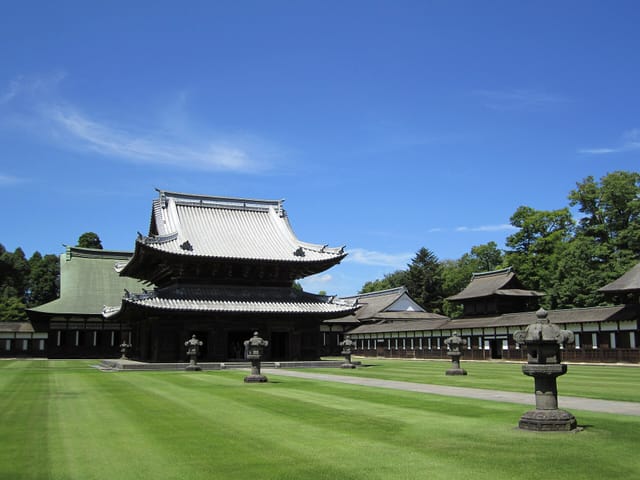
Edo · Temples · National Treasures
Zuiryu-ji
Takaoka, Toyama
At Zuiryu-ji you can walk through an early Edo-period Zen temple compound where the gates and halls stand in a straight line, linked by corridors. Its three National Treasures are the Sanmon, about 18 meters tall and rebuilt in 1818, the lead-roofed Butsuden, and the Hatto, which holds Maeda Toshinaga's memorial tablet.
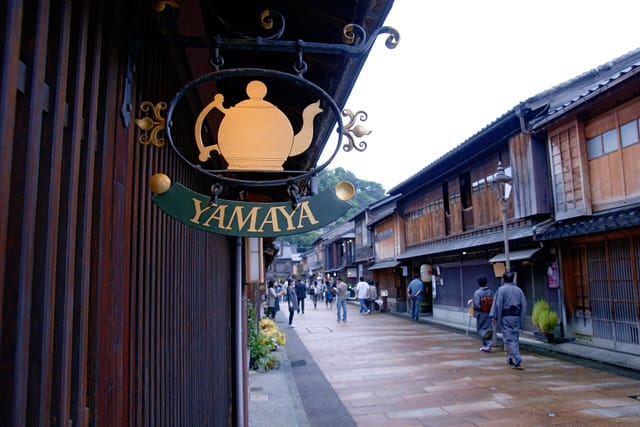
Historic districts
Higashiyama Higashi (Higashi Chaya), Kanazawa
Kanazawa, Ishikawa
A geisha teahouse district in Kanazawa laid out in 1820, with a rare concentration of teahouses from the late Edo to early Meiji periods. Matching houses with projecting lattices on the ground floor and tall second-floor banquet rooms line both sides of the street, carrying Kanazawa's teahouse culture into the present.
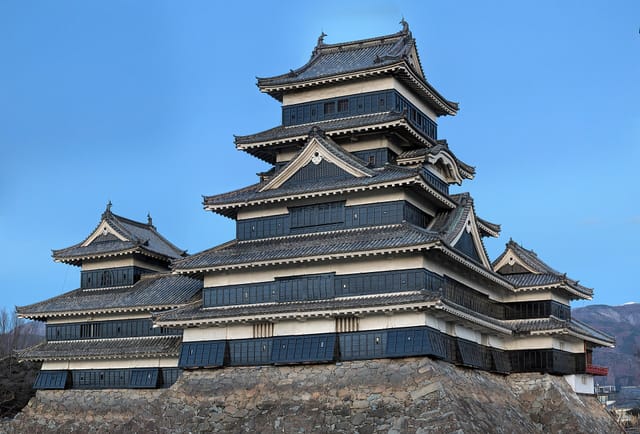
Momoyama · Castles · National Treasures
Matsumoto Castle
Matsumoto, Nagano
Five connected buildings form this National Treasure keep: the main keep, the Inui small keep and the linking turret, joined by the Tatsumi turret and the Moon-Viewing Turret. Wartime defenses of the late 16th century sit beside a peaceful early-Edo moon-viewing pavilion, and the main keep is considered the oldest surviving five-tier, six-floor keep in Japan.
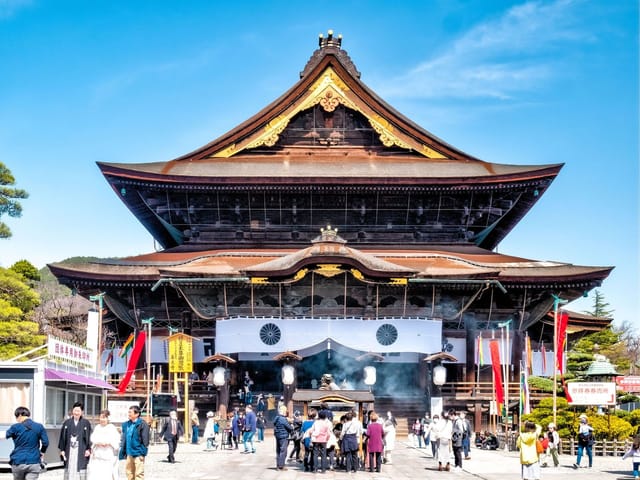
Edo · Temples · National Treasures
Zenko-ji
Nagano, Nagano
The main hall, rebuilt in 1707 and now a National Treasure, stands about 27 meters tall with a T-shaped shumoku-zukuri roof, and is among the largest wooden National Treasure buildings in eastern Japan. The non-sectarian temple enshrines a triad of Amida Buddha in one halo, and visitors can walk the pitch-dark Okaidan passage beneath the inner sanctuary.
Historic districts
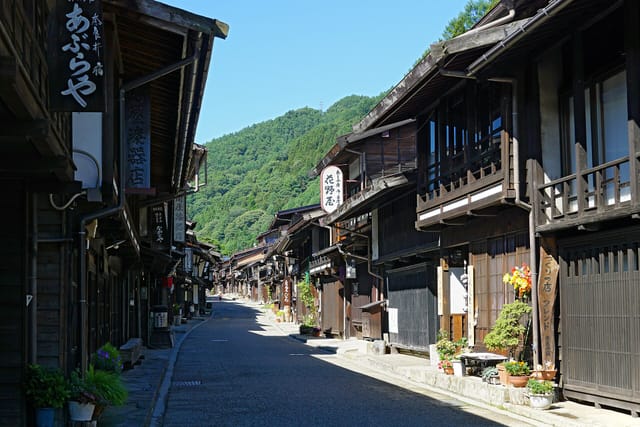
Narai-juku, Shiojiri
Shiojiri, Nagano
A post town on the Nakasendo at the foot of Torii Pass, said to have been the largest of the eleven Kiso post towns. Townhouses with overhanging upper floors line the old highway, and the town still keeps its traditions of lacquerware and bentwood crafts.
Historic districts
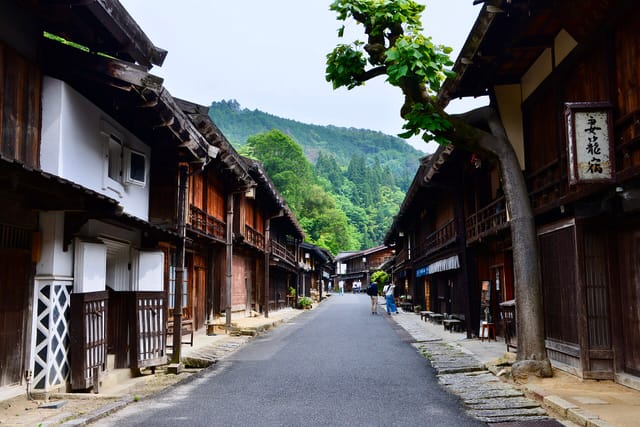
Tsumago-juku, Nagiso
Nagiso, Nagano
A Nakasendo post town whose rows of houses with overhanging upper floors and udatsu firewalls keep the look of the late Edo and Meiji periods. Residents pledged early on not to sell, rent out or tear down their properties, and the protected area extends to the mountains seen from the old road.
Historic districts
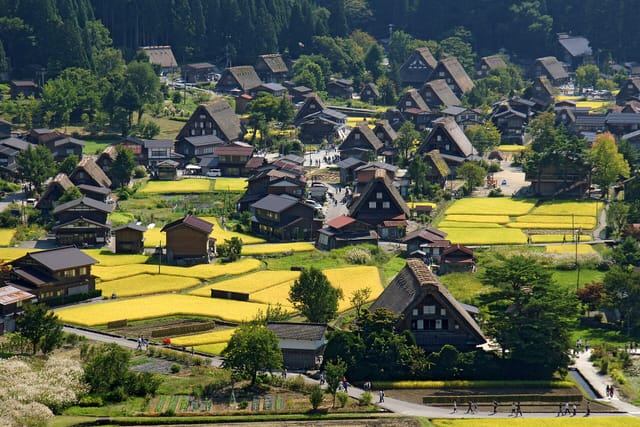
Shirakawa-go Ogimachi
Shirakawa, Gifu
A snow-country farming village where steep thatched gassho-zukuri farmhouses stand in rows on terraces along the Sho River, all facing the same way. Listed as a World Heritage Site with Gokayama in 1995, it still re-thatches its roofs through yui, a tradition of communal labor.
Historic districts
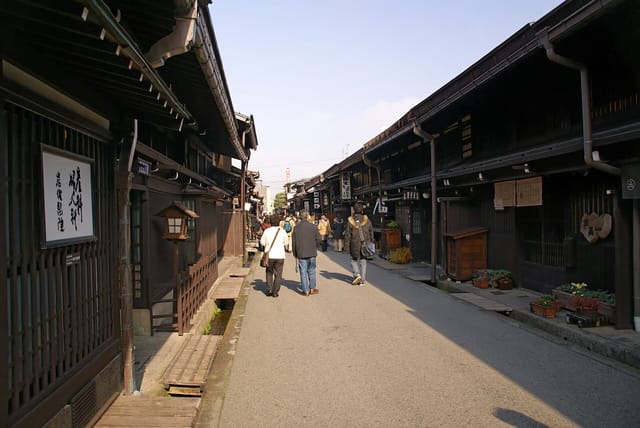
Sanmachi, Takayama
Takayama, Gifu
The merchant quarter of Takayama, a town ruled directly by the shogunate from the late 1600s. Townhouses with gently sloping roofs, deep eaves and fine wooden lattices line the three streets of Ichinomachi, Ninomachi and Sannomachi, backed by storehouses that served as firebreaks.
Edo · Shrines · National Treasures
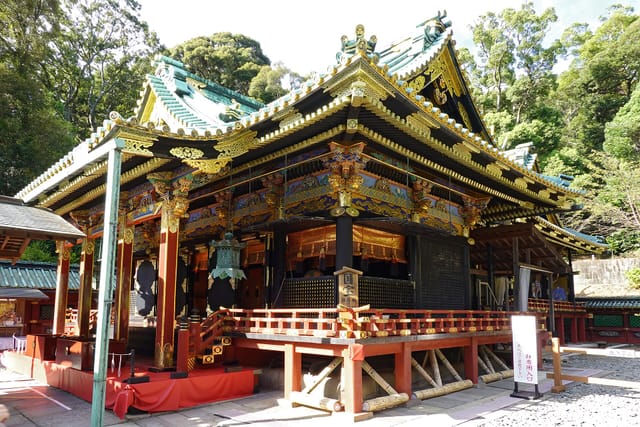
Kunozan Toshogu
Shizuoka, Shizuoka
At Kunozan Toshogu you can see the National Treasure shrine buildings (Honden, Ishi-no-ma and Haiden), built in 1617 on Mount Kuno where Ieyasu was buried, whose gongen-zukuri style became the model for Toshogu shrines across Japan. You can also take in the black and red lacquer and flower-and-bird carvings, the stone-step approach overlooking Suruga Bay, and Ieyasu's tomb.
Momoyama · Castles · National Treasures
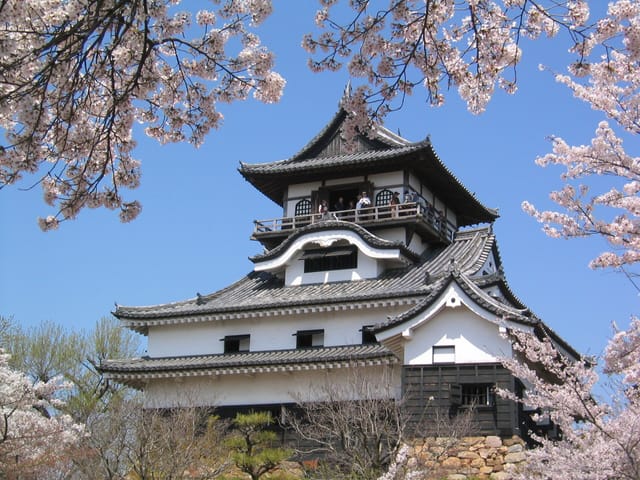
Inuyama Castle
Inuyama, Aichi
Standing on a hill above the Kiso River, Inuyama Castle's keep is a National Treasure that the castle's official site calls the oldest surviving keep in Japan. Climb its steep stairs to the top-floor lookout for views over the river, the old castle town and the Nobi Plain.
Historic districts
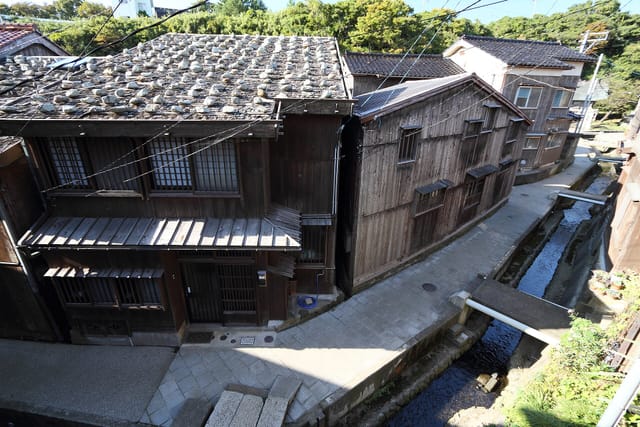
Shukunegi, Sado
Sado, Niigata
Shukunegi, Sado is a port town in Sado, Niigata, selected in 1991 as an Important Preservation District for Groups of Traditional Buildings.
Text in preparation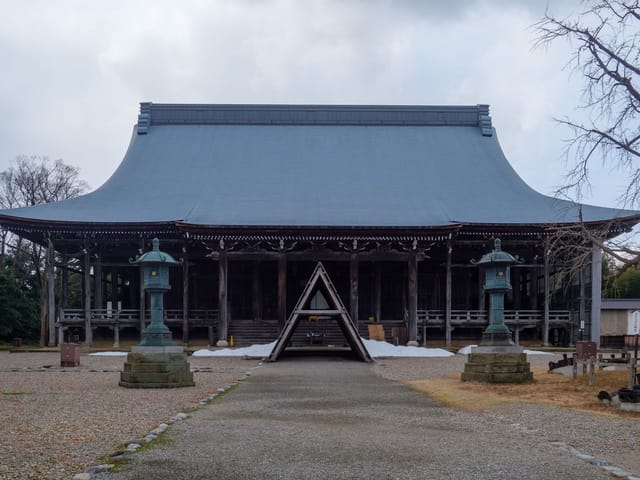
Edo · Temples · National Treasures
Shoko-ji
Takaoka, Toyama
Shoko-ji is a temple in Takaoka, Toyama. Its Main Hall and Ohiroma and Shikidai (Great Hall and Entrance) are designated National Treasures (Mid-Edo period–Late Edo period).
Text in preparation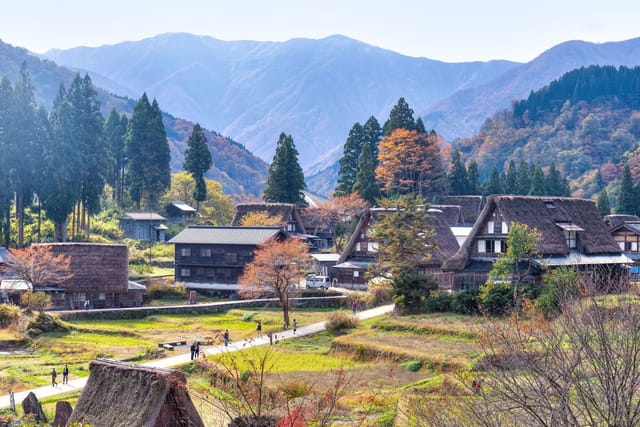
Historic districts
Ainokura, Nanto
Nanto, Toyama
Ainokura, Nanto is a mountain village in Nanto, Toyama, selected in 1994 as an Important Preservation District for Groups of Traditional Buildings.
Text in preparation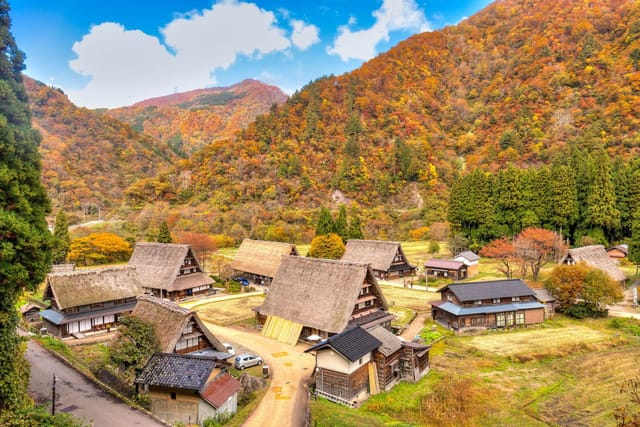
Historic districts
Suganuma, Nanto
Nanto, Toyama
Suganuma, Nanto is a mountain village in Nanto, Toyama, selected in 1994 as an Important Preservation District for Groups of Traditional Buildings.
Text in preparation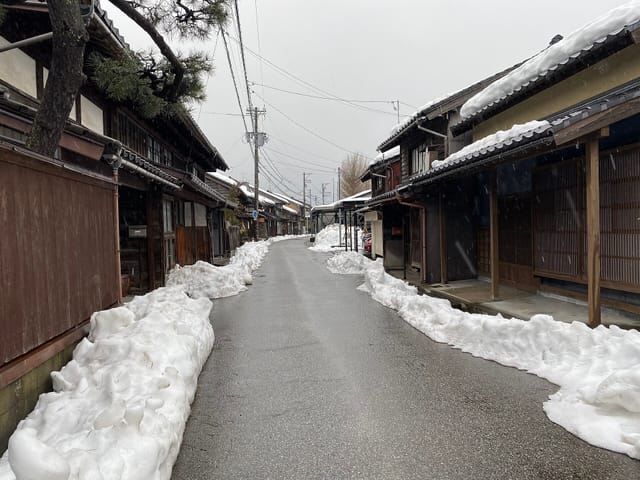
Historic districts
Yoshihisa, Takaoka
Takaoka, Toyama
Yoshihisa, Takaoka is a rural market town in Takaoka, Toyama, selected in 2020 as an Important Preservation District for Groups of Traditional Buildings.
Text in preparation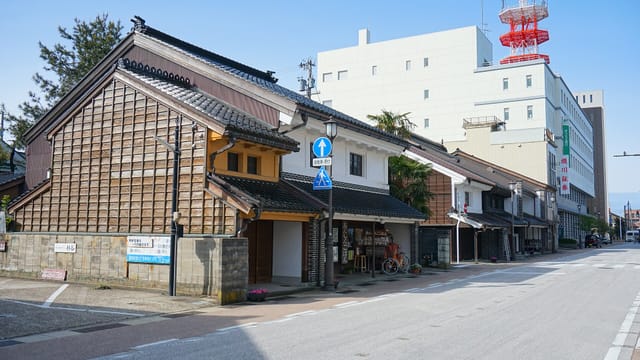
Historic districts
Yamachosuji, Takaoka
Takaoka, Toyama
Yamachosuji, Takaoka is a merchant town in Takaoka, Toyama, selected in 2000 as an Important Preservation District for Groups of Traditional Buildings.
Text in preparation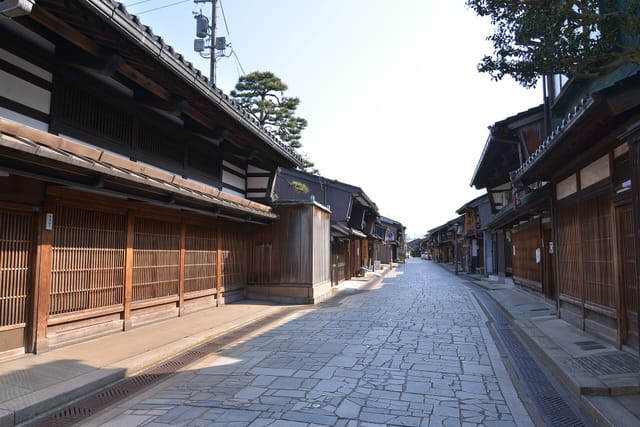
Historic districts
Kanayamachi, Takaoka
Takaoka, Toyama
Kanayamachi, Takaoka is a foundry town in Takaoka, Toyama, selected in 2012 as an Important Preservation District for Groups of Traditional Buildings.
Text in preparation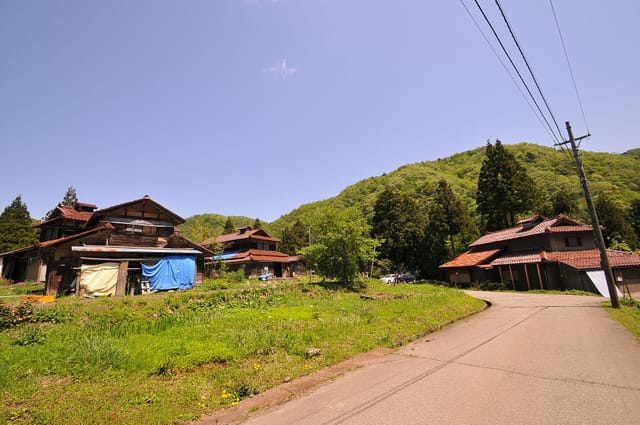
Historic districts
Kaga Higashitani
Kaga, Ishikawa
Kaga Higashitani is a mountain village in Kaga, Ishikawa, selected in 2011 as an Important Preservation District for Groups of Traditional Buildings.
Text in preparation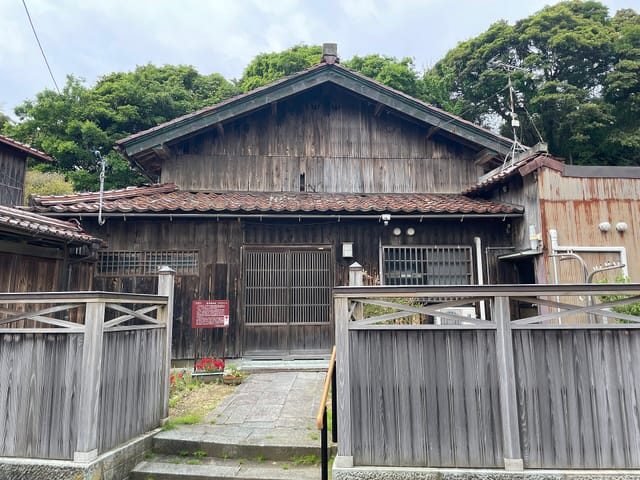
Historic districts
Kaga Hashidate
Kaga, Ishikawa
Kaga Hashidate is a shipowners' village in Kaga, Ishikawa, selected in 2005 as an Important Preservation District for Groups of Traditional Buildings.
Text in preparation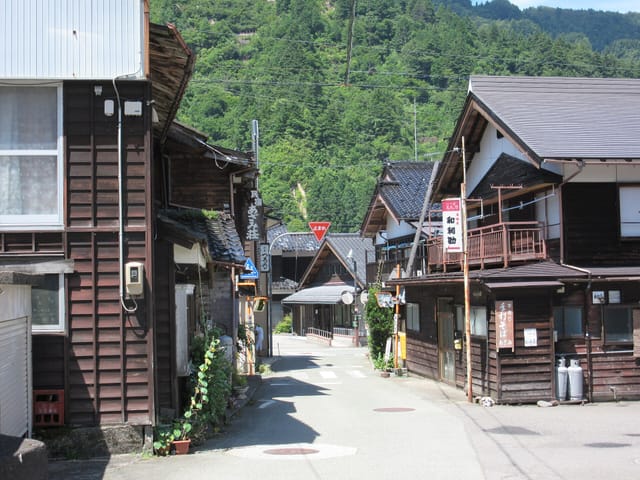
Historic districts
Shiramine, Hakusan
Hakusan, Ishikawa
Shiramine, Hakusan is a mountain village in Hakusan, Ishikawa, selected in 2012 as an Important Preservation District for Groups of Traditional Buildings.
Text in preparation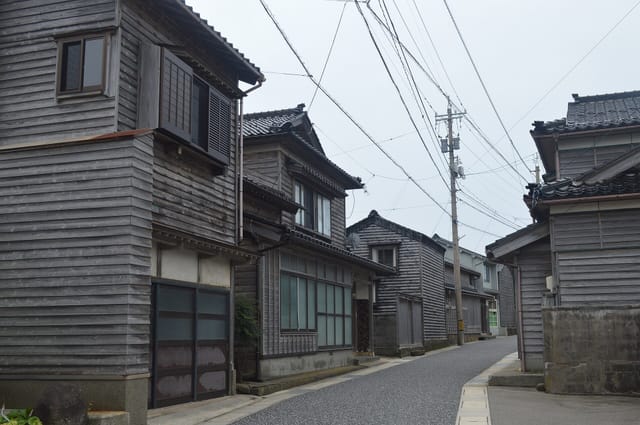
Historic districts
Kuroshima District, Wajima
Wajima, Ishikawa
Kuroshima District, Wajima is a shipowners' village in Wajima, Ishikawa, selected in 2009 as an Important Preservation District for Groups of Traditional Buildings.
Text in preparation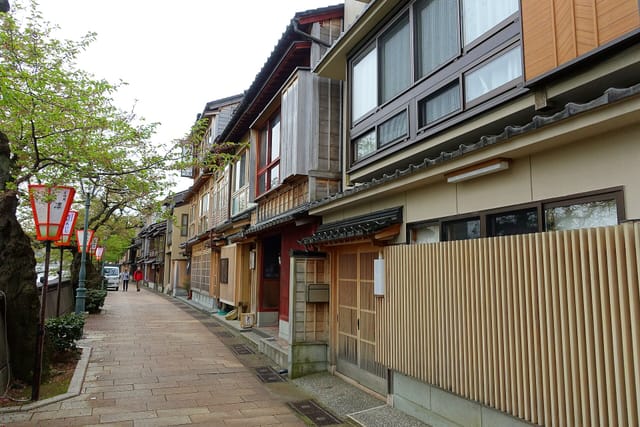
Historic districts
Kazuemachi, Kanazawa
Kanazawa, Ishikawa
Kazuemachi, Kanazawa is a teahouse district in Kanazawa, Ishikawa, selected in 2008 as an Important Preservation District for Groups of Traditional Buildings.
Text in preparation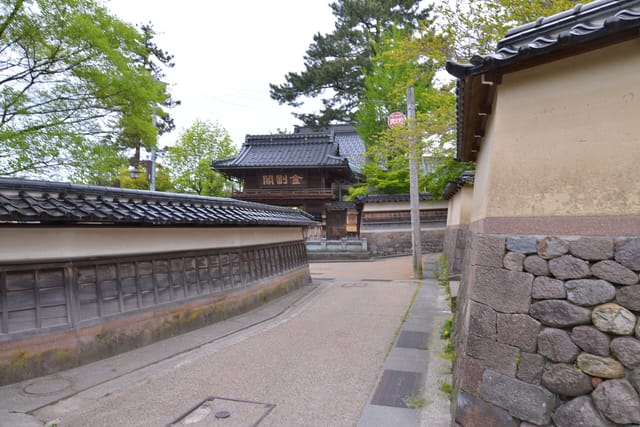
Historic districts
Utatsuyama Foothills, Kanazawa
Kanazawa, Ishikawa
Utatsuyama Foothills, Kanazawa is a temple district in Kanazawa, Ishikawa, selected in 2011 as an Important Preservation District for Groups of Traditional Buildings.
Text in preparation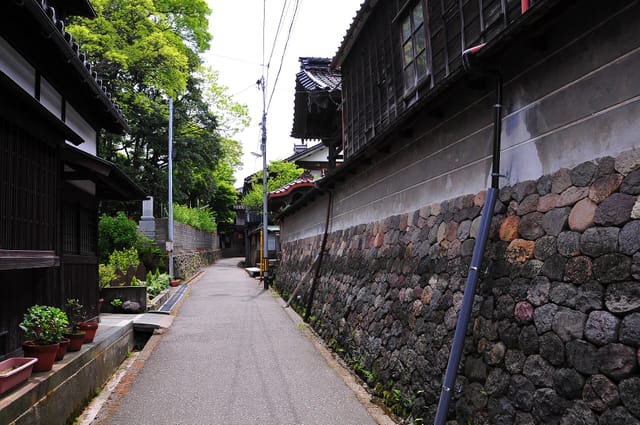
Historic districts
Teramachidai, Kanazawa
Kanazawa, Ishikawa
Teramachidai, Kanazawa is a temple district in Kanazawa, Ishikawa, selected in 2012 as an Important Preservation District for Groups of Traditional Buildings.
Text in preparation