Engaku-ji
Photo: Tsuyoshi chiba / CC BY-SA 4.0 · Original · Resized and croppedMuromachi period · Temples · National Treasures
Engaku-ji
円覚寺 (えんがくじ)
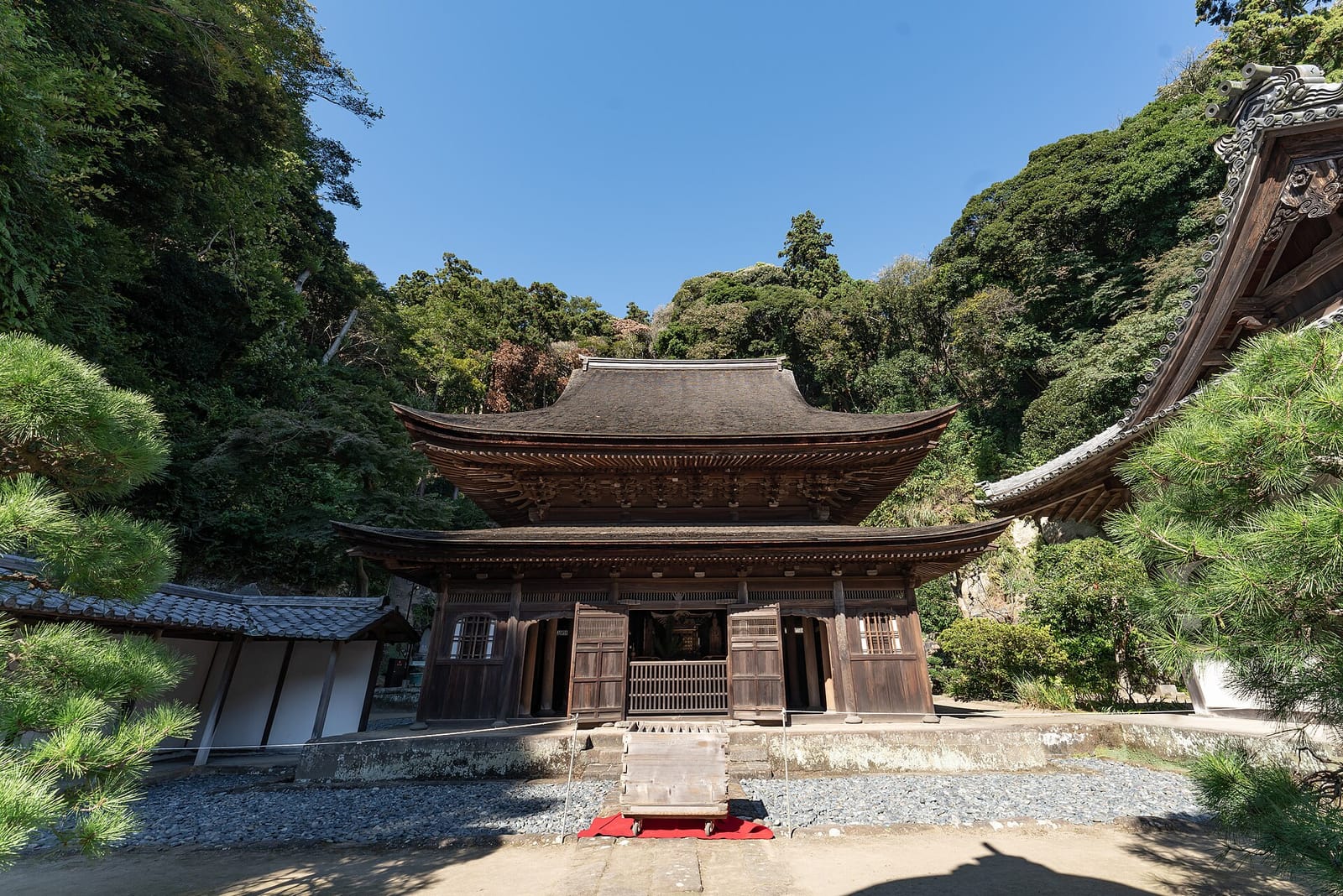
At Engaku-ji you can see the Zen-style Shariden (a National Treasure), known for the fan rafters of its eaves, and the Great Bell, a National Treasure and the largest temple bell in the Kanto region. The temple's events calendar includes three special openings of the Shariden a year.
Key facts
- Designation
- National Treasures
- Era
- Muromachi period
- Type
- Temples
- Location
- Kamakura, Kanagawa
- Address
- 神奈川県鎌倉市山ノ内
Before you go
- Opening hours
- 8:30 to 16:30 from March to November and 8:30 to 16:00 from December to February (visitors must leave the grounds within 30 minutes of closing).
- Closed
- Open every day (it may close for typhoons or snow).
- Admission (adults)
- Admission is ¥500 for adults.
- Time needed
- Check the official site
- Getting there
- One minute on foot from Kita-Kamakura Station on the JR Yokosuka Line. The temple has no car park for private cars, so use a paid one nearby.
- Good to know
- Tripods and monopods are not allowed, and sketching or painting in the grounds is prohibited.
Checked against official information on November 12, 2026. Fees and hours can change, so please also check the official site before you go.
Sources for visitor information
Key facts
- Designation
- National Treasures
- Era
- Muromachi period
- Type
- Temples
- Location
- Kamakura, Kanagawa
- Address
- 神奈川県鎌倉市山ノ内
About this place
Engaku-ji is a head temple of the Rinzai school of Zen, in Yamanouchi, Kamakura, Kanagawa, right in front of Kita-Kamakura Station. It was founded in 1282 by the regent Hojo Tokimune, with Mugaku Sogen, a monk he had invited from Song China, as its founding priest. According to the temple, Tokimune wished to build it to protect the country and spread Zen, and also to mourn those who died in the Mongol invasions, friend and foe alike. The name is said to come from a copy of the Engaku Sutra unearthed during construction.
The buildings stand along a valley of the kind known in Kamakura as a yato, and the path climbs gradually from the Sanmon Gate to the Buddha Hall and the Hojo. The temple says its present layout preserves the seven-building monastery plan it has had since its founding. The Sanmon Gate was rebuilt in 1785 by Daiyu Kokushi and is an Important Cultural Property of Kanagawa Prefecture. The Buddha Hall, which enshrines the principal image of a crowned Shaka Nyorai, collapsed in the Great Kanto Earthquake of 1923 and was rebuilt in 1964. The White Dragon painting on its ceiling was made by Moriya Tadashi under the supervision of Maeda Seison.
The Shariden (Relic Hall), a National Treasure, stands together with the Founder's Hall in Shozoku-in, which is still a training monastery today. According to the temple, it enshrines a tooth of the Buddha that Minamoto no Sanetomo brought from Nengren Temple in Song China. The head abbot's page on the temple website says the accepted view is that after a great fire in 1563, the Buddha hall of the nunnery Taihei-ji was moved here; the move was made by Hojo Ujiyasu and is said to have been finished in time for the founder's major memorial in 1585. The national cultural properties database dates the building to the mid-Muromachi period.
The Shariden is a small Buddha hall: a main body three bays square with a mokoshi skirt roof, under a hip-and-gable roof of wooden shingles. Its roof pitch and upturned eaves are beautiful, and the upper rafters under the eaves fan out like the ribs of a folding fan; these fan rafters make the small building look large. According to the temple, the cusped windows with straight vertical sides are typical of the late Kamakura period. The temple's events calendar includes three special openings of the Shariden a year; in 2026 they were January 1 to 3, May 3 to 5, and October 31 to November 2.
The grounds also hold the Great Bell, a National Treasure donated by Hojo Sadatoki in 1301; at 259.5 cm tall, it is the largest temple bell in the Kanto region. Beside it stands the Benten Hall, dedicated to the Benzaiten of Enoshima, who is said to have helped the casting succeed. In front of the Hojo is an old juniper designated a Natural Monument of Kamakura City, and the Myoko Pond, a release pond dating from the temple's founding, was restored in 2000. According to the temple, cherry blossoms are best from late March to mid-April, hydrangeas in June, and autumn leaves from mid-November to mid-December. Eating is not allowed in the grounds or inside the buildings.
Buildings designated as National Treasures
Engaku-ji Shariden (Relic Hall)
- Era
- Mid-Muromachi period
- Structure
- three bays wide, three bays deep, single-story with a mokoshi skirt roof, hip-and-gable roof, wooden-shingle roofing
- Designated
- June 9, 1951
Sources and date checked
Facts such as eras, structures and locations are edited and translated by us from the Agency for Cultural Affairs’ database of nationally designated cultural properties. The Agency and the national government did not produce this page.
Database of nationally designated cultural properties- Agency for Cultural Affairs, Database of National Cultural Properties: Engaku-ji Shariden (Relic Hall)
- About Engaku-ji (Engaku-ji)
- Guide to the Grounds (Engaku-ji)
- Annual Events and Services (Engaku-ji)
- Q&A (Engaku-ji)
- Shari Koshiki (Engaku-ji)
- On Quiet Elegance (Engaku-ji)
- Visitor Information and Access (Engaku-ji)
Checked on November 6, 2026
Report an error
If you notice a mistake, please tell us along with a source for the correct information.
Where to go next
Places you could see on the same day, and places worth comparing.
More from Kanagawa
Discover more of the same region on our sister sites.
Meiga no Furusato
Paintings linked to Kanagawa
- Lakeside
- One Hundred Famous Views of Edo: Haneda Ferry and Benten Shrine
- Thirty-six Views of Mount Fuji: The Great Wave off Kanagawa
- Thirty-six Views of Mount Fuji: The Tama River in Musashi Province